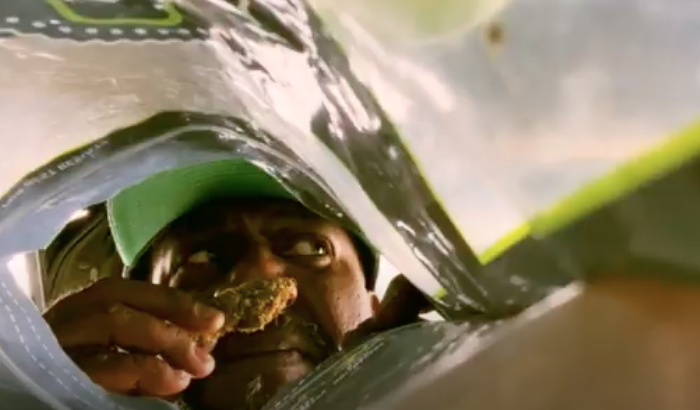
“I Like Not Having To Go Behind The Dumpster At Taco Bell”
We just downloaded the new study from the drug policy think tank Parabola Center for Law and Policy, and you can too. It’s called “I Like Not Having To Go Behind The Dumpster At Taco Bell: Consumer Perspectives in States with Established Cannabis Markets.”
According to the team behind it, the “study is one of the first qualitative research reports that asks consumers directly about their perspectives and experiences with legalization.” From Parabola:
There has been much speculation about cannabis consumers with Question 8 (repealing cannabis sales) on the ballot this November in Massachusetts. This study reports what happens when you actually ask them. The report examines perceived positive impacts, concerns, and recommendations gained from 37 in-depth interviews across nine states, the upper end of typical sample sizes in research of its type.
“As we examined cannabis consumer’s perspectives, we found that participants demonstrated a nuanced understanding of legalization policies,” Dr. Faith English, public health researcher at Parabola Center and postdoctoral fellow at Johns Hopkins University, said in a media release. “We hope that by publishing these insights, we can encourage informed voting and policymaking that seeks to understand cannabis consumers rather than stereotyping them.”
Researchers described the interviews as yielding “insights on legalization’s benefits, limitations, and recommendations.” Examples include:
- An appreciation for increased safety and harm reduction (“It’s very safe. I know that it’s not gonna be laced with anything”)
- Concerns about the increased presence of cannabis in public spaces (“You see and smell people smoking while they’re driving way more frequently . . . that still worries me”)
- Recommendations for greater transparency around use of tax revenue (“So it’s like, where is the tax money that was supposed to be going towards the schools?”)
Meredith McGee, MPH, who co-authored the study, said, “In-depth interviews allow us to capture important contextual information as well as experiences of smaller or underrepresented populations that might otherwise be missed by polls and other quantitative methods.”
You can download the report here.