“Reporting by Injustice Watch exposed a lab tied to more than a dozen wrongful convictions for driving under the influence.”
Our disdain for most mainstream and national cannabis coverage is not a mere reflex. Rather it’s a learned response to a century-long track record of failure.
One of the saddest aspects of the over-saturation of severely mediocre media is how solid independent journalism is frequently overlooked. That’s the case in all arenas, but especially in situations intersecting with drug policy.
Those problems considered, it is remarkable to see this year’s Victor K. McElheny Award for Local and Regional Science Journalism go to the Chicago-based nonprofit newsroom Injustice Watch for a “sweeping investigation into a forensic toxicology lab.” More from the awarding Knight Science Journalism program here:
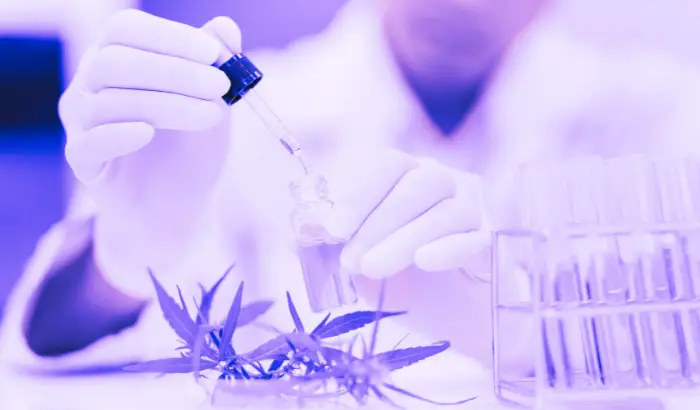
The investigation, “Fake Science, Faulty Methods, Misleading Testimony,” exposed problems with urine analyses at a University of Illinois-Chicago lab that may have led to dozens of wrongful convictions for driving under the influence of cannabis.
Award judges called the investigation a “stunning indictment of the oversight of forensic science” and applauded the skillful storytelling, which “weaved impactful scenes with science, accountability, and human stories that drove home what was at stake for the Chicago community.”
The investigation was reported by Maya Dukmasova, a senior reporter at Injustice Watch who focuses on judges and other key players in the court system, with a particular interest in opaque bureaucracies and unchallenged expertise. The story was illustrated by Injustice Watch visual reporter Verónica Martinez, a Chicago-based artist whose work touches on the Cook County justice system, police misconduct, and LGBTQ+ health.
With social consumption establishments inching up on the horizon, you can count on driving and intoxication poking their heads into the prevailing conversation. As perhaps they should be in some ways, but on whose terms?
As Injustice Watch reveals in this particular case, ingredients for potential malfeasance in the effort to crucify stoned drivers include: overzealous prosecutors, incompetent public crime labs with scant oversight, and proud Luddites on the bench.
This revealing long read—”built on more than 45 Freedom of Information Act requests, more than 100 interviews, and a review of some 8,000 pages of public records”—is a good resource to keep on hand for those upcoming battles, whether on the policy or legal front. Thorough and compelling, we encourage people to bookmark, read, and share it.
Here’s an excerpt from the August 2025 feature that reflects the apparently demented passive nature of the schadenfreude on full display:
“This was a very interesting trial,” the judge said in a sincere tone after both sides finished their closing arguments. He found Thompson guilty on one count of speeding and not guilty of impaired driving based on the field sobriety tests. That left only the DUI-cannabis charge hanging on Bash’s lab analysis.
“As to the charge with all the science, a big reason I went to [law] school was because I stunk at math and I stunk at science,” the judge said, and announced he would take some time to review the transcript before ruling.
A month later the judge found Thompson guilty and sentenced him to court supervision, a two-year slog with hundreds of dollars in court costs stacking on top of the loss of his driving privileges, and many 90-mile round trips from his home on the Far South Side of Chicago to the courthouse in Wheaton.