|
From the first Social Consumption Establishment license types that are likely to be approved, to on-site packaging considerations
|
| |
|
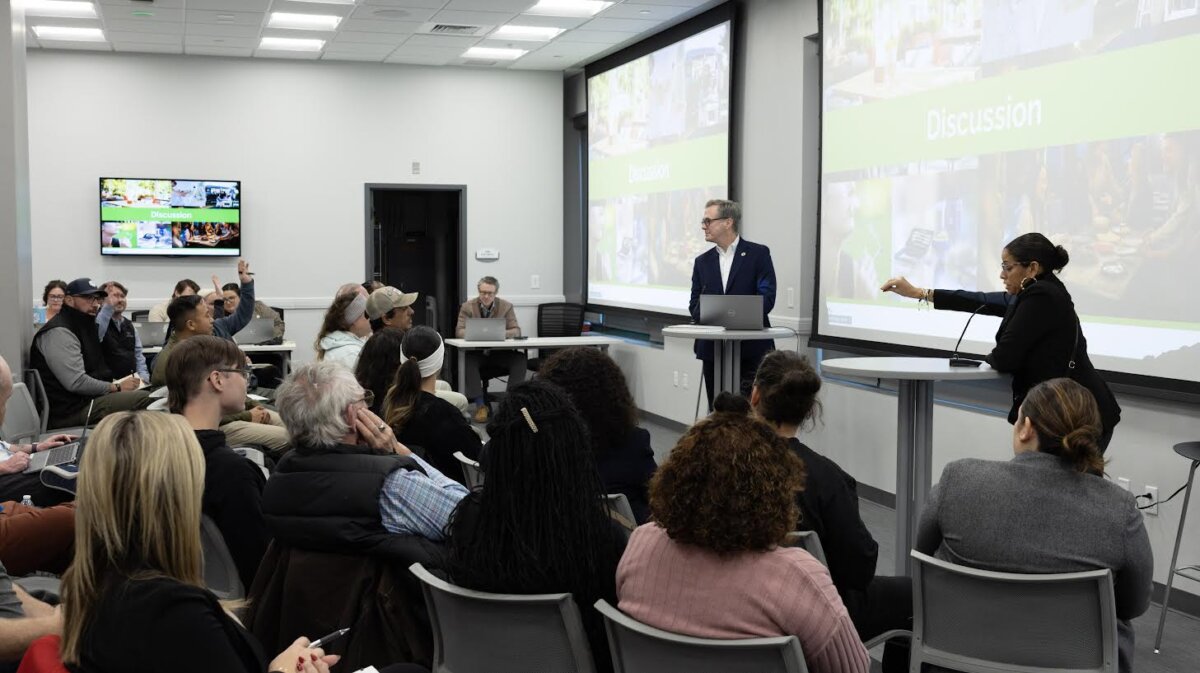
After many years of waiting for the new commandments of social consumption to emerge, at today’s meeting of the Cannabis Control Commission, Acting Chair Bruce Stebbins, Commissioner Nurys Camargo, and Deputy General Counsel Michael Baker are scheduled to introduce and discuss draft regulations for “social consumption license types.”
This “review” of “red-lined social consumption regulations” follows a presentation on Dec. 6 which outlined a general framework for licensing Social Consumption Establishments, or SCEs. Stebbins, who helped organize a Social Consumption Working Group over the past year, proposed three distinct on-site social consumption license classes: Supplemental, Hospitality, and Event Organizer.
You can count on most news outlets reporting cluelessly on this subject; following the aforementioned unveiling of the loose framework earlier this month, many television stations implied that we’ll have 4/20-friendly lounges statewide within weeks. The truth, of course, is not so simple, and those following the story closely should consider the following as social consumption unfolds … |
| |
|
The proposed social consumption rules seem pretty generous
No one likes to compliment the CCC, but the general consensus has been that the proposal introduced by acting Chair Stebbins on Dec. 5 is promising. Unlike some other regulations we have seen in Massachusetts cannabis, the thinking this time around doesn’t appear to be preeminently punitive. Social consumption, it seems, is something that the state actually wants, which certainly was not the situation with weed under governors Deval Patrick or Charlie Baker.
We’ll have to wait until we can see what the final wording ultimately reads like, but the draft outline thus far appears to be designed for businesses to win. They’re realistic, in a sense—one possible Hospitality license type, for example, allows for an entire venue to be designated for social consumption, rather than only a relegated smoking section off in a corner. Another generous feature is under the Event Organizer class, which would allow for 420-friendly events that last up to five days, with promoters being able to host up to 24 events per year.
The Supplemental license type will probably come first
According to Commissioner Stebbins, their working group is “assuming the Supplemental license type is the first one we might see.” That’s for “Existing, qualifying MEs, including Cultivators, Product Manufacturers, Retailers, Microbusinesses, Craft Marijuana Cooperatives or Delivery Operators,” and will involve “On-site Consumption allowed within or attached to an existing [Marijuana Establishment] ME.”
According to the proposal, Supplemental license holders “May host social consumption activities within existing facility or adjoining space,” while “Consumers may consume product purchased on site.” The CCC’s example of a venue in this designation include: “ME with an On-site Consumption Space attached – Lounge, Café, Tasting Room, etc.” |
| |
|
As for the Hospitality license type …
This one is where the CCC expects to see a lot of creativity, and is leaving room for experimentation. “What’s interesting to me is the diversity of the cannabis market in Massachusetts,” Stebbins said. “There are people making beverages, there are people who want to provide a food experience. When it comes to the hospitality license, we want to give space for people to be innovative.”
These would be available for a “Qualifying Consumption Licensee in a new or existing non-cannabis commercial business space,” with: “On-site Consumption allowed within a new cannabis business, or attached to an existing non-cannabis business,” and “Mixed-use space allowed as a partnership with a non-cannabis business.” Examples include: “Lounge, Café, Entertainment / Recreational Space, Yoga Studio, Theater, Lodging Space.”
These licenses will be exclusive at first
The draft regulations coming out today include a 60-month exclusivity period for certain license types, up from 36 months in prior renditions. The proposed language reads: “Establishment licenses shall be limited on an exclusive basis to businesses controlled by and with majority ownership comprised of Social Equity Businesses; Economic Empowerment Priority Applicants; or Social Equity Program Participants; or Microbusinesses and Craft Marijuana Cooperatives, for a period of 60 months from the date the first Hospitality On-site Consumption Licensee receives a notice to commence operations.”
After five years, “the Commission may, by vote, decide to extend that period following a determination that the goal of the exclusivity period to promote and encourage full participation in the regulated Marijuana industry by people from communities that have previously been disproportionately harmed by Marijuana prohibition and enforcement of the law, by farmers, and by businesses of all sizes, has not been met.” |
| |
|
Out of state participation
Will small and independent event companies that are based in other states but that have been throwing great parties in Massachusetts for years be able to play under the upcoming rules? I’m not trying to scare anyone, I’m just thinking out loud before anything is codified. I suppose they will have opportunities if they are doing business with a company that qualifies to operate during the exclusivity period, but it will be interesting to see if the bar for outside participation is the same as it is with existing license classes, or different for social consumption.
On the flip side, we’re about to see just how much interest there is on the venue and event side from cannabis investors and multi-state operators. As the draft regulations coming out today read, the rules appear to basically be the same as they are for existing license types. Still, there could be nuances to look out for, as well as changes between now and the final wording.
What happens to existing social consumption operations?
During his presentation about social consumption, acting Chair Stebbins said the body’s relative working group did its research and outreach with acknowledgement that “social consumption is already happening.” He even gave a shoutout by name to the Summit Lounge in Worcester, which the commissioner noted “is right down the street” from the CCC office.
There’s not a whole lot already happening around the commonwealth for social consumption, but there are some other private spots where people smoke besides the Summit, and despite the good intentions of Stebbins and others, it’s easy to imagine them being legislated into oblivion. Which would be a shame, considering how they have kept things demonstrably safe and paved the way for whatever is coming. As the proposed regulations are rolled out and edited, it’s important to keep these legacy operators in mind. |
| |
|
Precedent is key to understanding what is coming
As Stebbins noted in a media availability on Dec. 5, Chapter 180 of the Acts of 2022, An Act Relative To Equity In The Cannabis Industry, “really provided elements for social consumption to become a reality.” In it, you can see how the law “was amended to allow communities to allow social consumption through referendum and expanded option to permit cities or towns to opt in by by-law or ordinance change,” and was changed to allow “combustion, heating, vaporization or aerosolization of cannabis products, at a licensed marijuana social consumption establishment.”
Will there be a cap on social consumption licenses?
While there was no mention in the Dec. 5 presentation of how many licenses any one entity will be able to have for social consumption establishments, the draft coming out today states: “No Person or Entity Having Direct or Indirect Control shall be granted or hold more than three Supplemental On-site Consumption Licenses, three Hospitality On-site Consumption Licenses, and three Marijuana Event Organizer licenses.”
We’ll see what happens with that in the deliberations, but there is also some history to reference which may serve as guidance. As I reported last week, the CCC actually produced enlightened draft regulations for social consumption back in 2017, but scrapped them after “state officials requested a pause … citing public health and safety concerns.”
From the minutes of their December 2017 meeting on those rules: “After discussion, Commissioner [Shaleen] Title agreed that a licensee may be granted up to three social consumption licenses. Chairman [Steve] Hoffman stated that the motion was that a licensee could be granted up to three social consumption licenses and no social use establishments may operate in municipalities with bans or moratoria on marijuana establishments.” |
| |
|
Packaging could be different for social consumption establishments
For those who lose their mind every time they have to tear through a cardboard box and then more plastic just to get to a product, there may be hope in these new license classes. In short, if something isn’t going to leave the premises anyway, then there’s no real need to overdo it. The following, from the 2017 discussion between commissioners, should be considered this time around if it hasn’t already been …
“Commissioner Title asked if there could be an exception for social consumption packaging that would be used on the premises. The Commissioners talked about the proposed exception. Commissioner [Jennifer] Flanagan pointed out that the marijuana industry subcommittee recommended that social consumption packaging not be disposable.” But for anything that is leaving the premises, they recommended “marijuana product[s] must be placed in exit packaging that can be resealed with a child warning.”
It’s important to help people who live in public housing
As we have opined before, is it critical to provide safe spaces for people who live in public housing to consume cannabis, since they are subject to harsh punishments for smoking, including but not limited to eviction by housing authorities. I understand that the law is written to benefit operators with economic hardships, but it’s also important to prioritize certain consumers.
As we finally get closer and closer to having these venues, whatever they end up looking like, let’s look out for anyone who lives under the roof of a strict landlord. As for public housing specifically, the federal policies that trickle down and reflect in state laws stem from a 2014 guidance memo that not only ignored the plight of medical patients but actually targeted them. As HUD wrote about the “use of marijuana in multifamily assisted properties”: “the Controlled Substances Act (CSA) categorizes marijuana as a Schedule 1 substance and therefore the manufacture, distribution, or possession of marijuana is a federal criminal offense. Because the CSA prohibits all forms of marijuana use, the use of ‘medical marijuana’ is illegal under federal law even if it is permitted under state law.”
Needless to say, the same goes for recreational weed. So let’s get people a refuge sooner than later. |
| |
|