

Upon reinstatement to the Massachusetts Cannabis Control Commission, Shannon O’Brien champions efficiency, transparency, and social equity
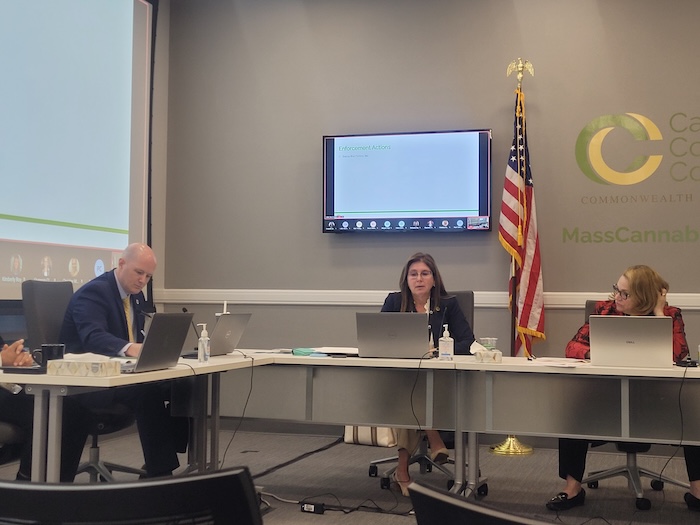
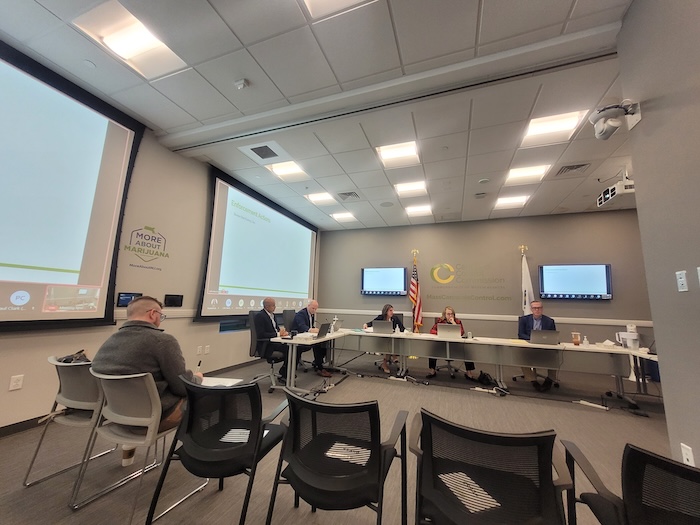
News vans weren’t lined up outside of the Massachusetts Cannabis Control Commission on Wednesday. Nor was there a thick gaggle of journalists bombarding the body’s returning Chair Shannon O’Brien, who was on hand for her first meeting since being reinstated.
O’Brien was suspended in September 2023 and then fully fired from the top spot in 2024. Today’s return comes after an excruciating shit fight with state Treasurer Deb Goldberg that dragged on for two years only for a superior court judge to reverse the decision.
The mood in Worcester on Wednesday was far more settled than many (including me) expected. Though O’Brien was in many ways vindicated by the aforementioned judgements, she nonetheless had some detractors at the agency. Positive momentum reigned though, set off by the chair’s opening comments. Saying that she has “an even deeper sense of purpose and gratitude” after two years of absence, O’Brien spoke to owners, operators, and other direct industry stakeholders watching online.
“You have faced tremendous hurdles as pioneers in a growing market,” she said. “I see this moment not as a return, but as a new beginning.”
[Watch the press conference after Wednesday’s meeting on the TJM Instagram page here]
Speeding up the process
After O’Brien’s kickoff statement, the three sitting members present got right down to business (Commissioner Ava Callender Concepcion did not participate in Wednesday’s meeting). It was almost like there hadn’t been an interruption, court case, and borderline insatiable media frenzy (the latter of which has apparently fizzled out since things returned to relative normal, though not entirely, as many outlets cheaply beat up on the CCC last week for briefly postponing its public meetings to get things in order with the chair’s comeback).
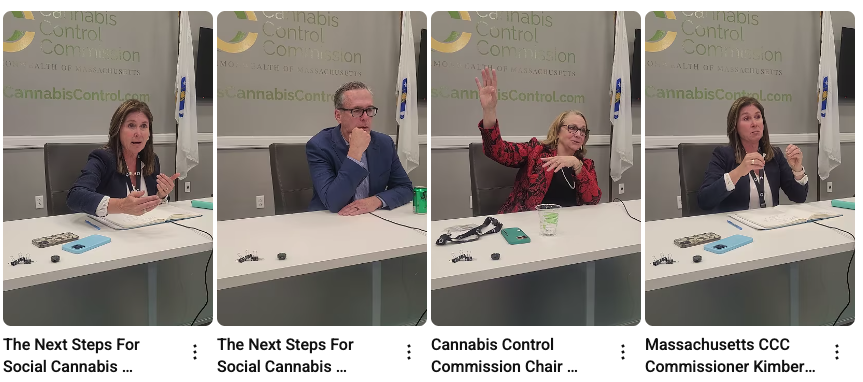
Commissioner Bruce Stebbins, who has helped quarterback the writing of draft regulations for social consumption, spoke about meeting with valuable sources for that project, including an expert on banking and the team at Diaspora in Cambridge. In her turn, Commissioner Kimberly Roy spoke about “Shifting Gears,” the commission’s education curriculum around stoned driving, and recognized with “cautious optimism” President Donald Trump’s recent social media post about CBD. CCC Executive Director Travis Ahern lamented the agency’s “problematic” budget situation. Hardly shocking news.
The first nearly interesting thing happened during an early agenda item, for commissioners to discuss and then vote on two pending staff recommendations on changes of ownership. In a demonstration of extreme caution, O’Brien acknowledged that she went to college with a principal owner of Nova Farms, one of the companies seeking a change. The chair didn’t recuse herself from the decision (all three commissioners present voted yes), but simply said on the record that she notified the office of the state treasurer, who will certainly be thrilled by the communication.
Swiftly moving through the items on her list, O’Brien then proceeded to start the discussion on the CCC’s “Three-Day Commence Operations Waiting Period.” ED Ahern explained the rule as formerly being helpful for municipalities to have more preparation time back when long lines would jam up city blocks upon the opening of a new store. Perhaps signaling that a commission captained by O’Brien will attempt to tackle topics like this more efficiently than in the past, Commissioner Roy called the wait period a “regulation that no longer has utility.” All on the same page, the members voted together to axe it.
O’Brien spoke about how many of the stringent regulations put in place in the beginning of adult-use need to be relaxed, and that such changes have to be expedited more quickly than they have been in the past. She said in a press conference after the meeting: “How do we figure out how we get through these processes as fast as we can?”
The chair added, “I’ll admit, I had never written regulations before, so [in 2023] I was still learning as we were going along, and looking to the guidance of our leadership team. We had a three-month gap … [This time], I hope that we can take a fresh look at how we write [regulations] and how we can streamline that process.”
Settling the matter of who should serve as acting chair
Commissioners continued to gel during their discussion of a proposed enforcement action against a Western Mass pot shop (read our coverage of that situation here). Though an unexpected twist, commissioners Stebbins and Roy followed O’Brien’s lead in sending the agreement, which she deemed likely inadequate, back to the drafting process for revisions. Most of the meeting ran in such a fashion, hinting at how things may proceed moving forward; still, the chair did tend to some business pertaining to her suspension and firing.
In short, upon her unceremonious exit from the CCC in 2023, O’Brien had attempted to name Roy as acting chair. Other commissioners disagreed, however, and instead held several contentious and rather humiliating public votes to fill the interim spot. The (lack of) an apparent prescribed process led to a monthslong game of musical chairs, and to what the reinstated boss said may be certain compromised votes and decisions made under the ad hoc acting chairs. She’s looking into that with help from inside and outside the commission, but in the meantime O’Brien made it clear that Roy should take her seat if she is unavailable.
In a statement released after Wednesday’s meeting, ED Ahern clarified, “Before taking any action to re-affirm the Commission’s work over the last two years—including the approval of hundreds of licenses and two regulatory reform packages—the Chair and I will consult with the state Attorney General’s office to confirm previous Commissioner votes were taken in line with the law.”
Lab testing and everything else
Commissioners with their supporting counsel and staff members also touched on big topics like lab testing, though O’Brien was cautious to avoid diving too deep into specifics. The chair wasn’t afraid to address difficult issues though, saying, “Moving forward we have to make sure we are transparent and share data.” And, “There may be a number of unregulated products coming through our system.”
O’Brien said that she will soon publish a letter outlining her personal priorities for the upcoming months. Among them, the chair said that she will focus on boosting Social Equity applicants: “You can have all these people trained, but if we have all of these people who have been disproportionately impacted by the war on drugs and they’re not getting the benefit of being licensees, what are we doing this for?”
“After two years … I’m going to have to be reading a lot, I’m going to have to be talking to a lot of people,” O’Brien said, “but the bottom line is we follow the rules, and we make the soundest decisions that we can based on the best information we have.”