
Investigators found the company used “prohibited advertising practices” and that owner “made statements … that were deceptive … or tended to create misleading impressions.”
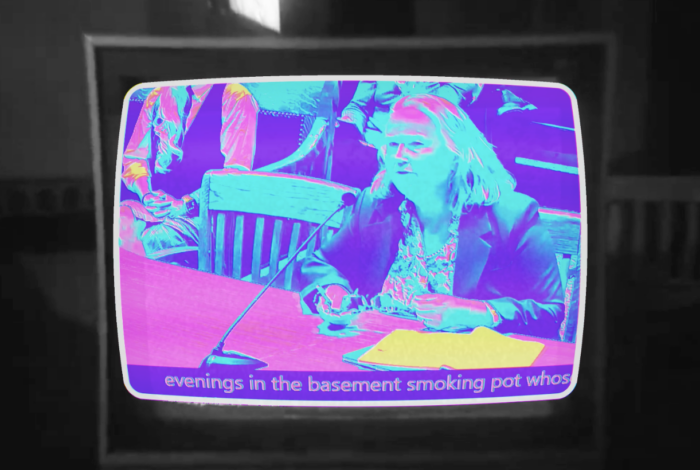
On Wednesday Cannabis Control Commission members voted unanimously against signing a stipulated agreement to execute a proposed enforcement action against a Western Mass pot shop.
It wasn’t because they didn’t want to hold the business accountable for the findings of CCC investigators—in short, the licensee was found to have used weed for promo in a noncompliant fashion and subsequently lied to inspectors about it. Rather, commissioners passed up the chance to drop the hammer at the moment out of concern about who exactly the proposed penalties would impact.
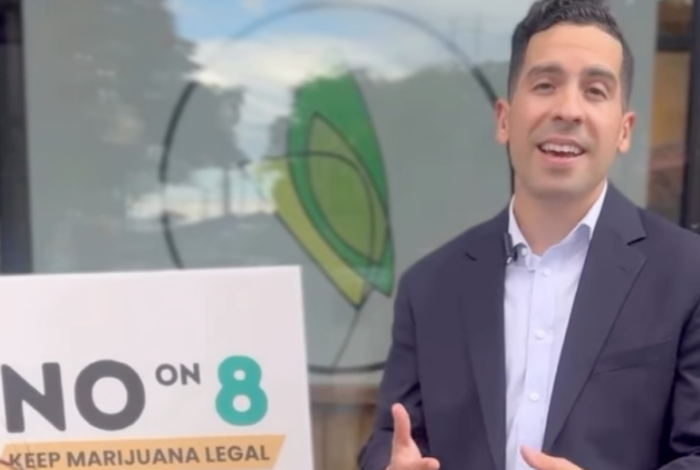
The document presented was a Final Order and Stipulated Agreement between the CCC, the Holyoke-based Boston Bud Factory (BBF), and [that company’s proprietor] Franklyn Dailey. The agreement was “offered for the purposes of settlement and in lieu of further administrative action.” As the rejected document was written, “The Parties stipulate to the Facts of Record and Applicable Law … but Respondent Licensee and Respondent Daily neither admit nor deny the Commission’s Findings.”
What investigators found: pre-rolls at the arcade bar
The CCC’s investigation into these matters “involved a facility called ‘The Joint,’ an ‘arcade bar and event space,’” which is a “separate business entity and operates independently from BBF.”
On March 18, 2022, “Commission Investigators located BBF-branded Marijuana pre-rolls in an arcade machine” at The Joint. The pre-roll was “sold at BBF’s retail store by Dailey on February 8, 2022.” “Staff at The Joint informed Commission Investigators that the arcade machine was restocked weekly.”
Meanwhile, back at Boston Bud Factory, in the licensee’s vault, investigators “discovered a box of 0.3g Durban Thai/Cindy 99 Marijuana pre-roll blends” that was labeled “Not for Retail,” and placed “behind other boxes out of direct view.”
Asked about the products, Dailey, the majority owner, “told Commission Investigators, ‘We don’t sell 0.3g pre-rolls’.” At the time, investigators had already observed Dailey at a “Marijuana social event” at The Joint, where he was “approaching tables and conversing with vendors” and showing a “rosin press, bearing BBF branding,” which he said he would “rent out to anyone who wished to use it.”
During a subsequent inspection, when asked about the pre-rolls labeled “Not for Retail,” Dailey said they were his “personal stash” and that he “do[es] not give them out to people.” When asked how the pre-rolls ended up in the arcade machine, he reportedly added that a minority owner “had purchased the pre-rolls and filled the arcade machine.” Dailey also stated he knew about the arcade machine containing the pre-rolls “a couple weeks ago” after being contacted by the Holyoke Chamber of Commerce, and had told the Chamber the pre-rolls were “leftover from a private party.”
A rosin press and a block party
Things only got worse from there. During an unannounced inspection, investigators noted BBF’s menu “had 0.5g pre-rolls… available for sale, but not the 0.3g pre-rolls found in the arcade machine at The Joint.” They also found that BBF was “advertising and promoting a Marijuana themed social event”—a block party sponsored by BBF—at The Joint’s parking lot.
Regarding the block party, investigators “did not observe BBF staff controlling access to the block party or verifying the age of attendees or participants on entry.” During an inspection on the day of the block party, investigators “observed Marijuana Product packaging and a rosin press located in an open area on the sales floor” near a sign that said “limited access” but where “there was no barrier preventing access to the area.”
These actions constitute multiple alleged violations of state regulations, including that which prohibits “Brand Name Sponsorship” of an event unless “Advertising is targeted to entrants or participants reasonably expected to be 21 years of age or older.” Dailey was found to have “made statements to Commission Investigators… that were deceptive, misleading, or tended to create misleading impressions.”
The proposed (and rejected) remedy
For a stipulated remedy, the CCC enforcement unit proposed (and Boston Bud Factory agreed to) a “14-day suspension” of both its Retailer and Product Manufacturer licenses “in lieu of a monetary penalty.” During the suspension, the licensee “shall cease all licensed operations.”
Dailey agreed to a “30-day suspension of his following Agent Registrations.” During his suspension, he “shall not: Be present at Respondent Licensee’s Premises [or] Work or volunteer at any Marijuana Establishment.”
There’s also $7,000 in fines, and a “12-month probationary period,” during which “Any substantial noncompliance … shall constitute full and adequate grounds for license suspension or revocation.” During the probationary period, the Licensee must “submit notice to its assigned Investigator not later than 72 hours before engaging in any Brand Name Sponsorship or Advertising.”
Upon discussion, the proposed 14-day suspension of the BBF retail and manufacturing licenses became a sticking point for commissioners. In her first meeting back as CCC chair following two years away from the job, Chair Shannon O’Brien noted the apparent uneven enforcement actions against different companies. Referring to a scathing recent assessment of agency operations by Auditor of the Commonwealth Diana DiZoglio, she asked, “How are we saying to the licensees, based on what the auditor said, that we are having consistent penalties across the board?”
O’Brien also asked commission attorneys about some details of the proposed agreement. Does it allow for owners and executives to receive pay during that two-week suspension period? How about the lower-paid manufacturing workers and budtenders? Less than satisfied with the responses offered by some colleagues to her questions, O’Brien posited that the proposal was inadequate enough to reject.
Her fellow commissioners, Roy and Stebbins, agreed, with the former also questioning the commensurate nature of punishments doled out. The three voted unanimously against signing the stipulated agreement.
It was the first time members have ever sent an enforcement action back for edits. O’Brien didn’t seem to be making a grand symbolic gesture, but the message was clear: there’s a new old chair in town.