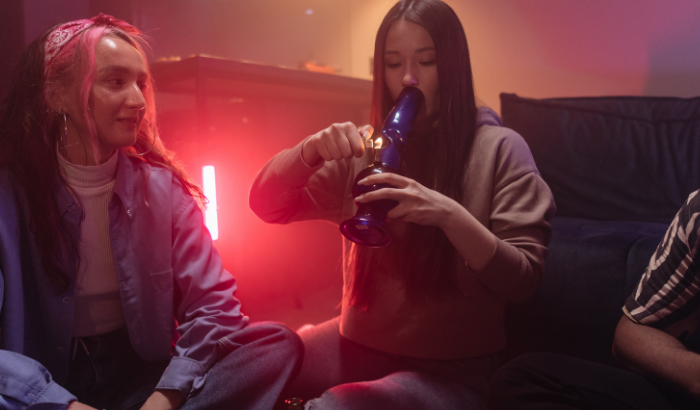
Bill Perrier breaks down risk, unpredictability, and preparation regarding the new license classes and retail cannabis frontier
Bill Perrier is a nice guy, but he is also a bit of a killjoy. That’s probably what you want in your policy muse, especially in the cannabis industry, where recreation can beget serious litigation.
As a senior producer for C&S Insurance, which has several offices in Massachusetts, Perrier works with Cannabis Control Commission licensees across the state. He also brokers policies for restaurants, and has experience with clients that are considered especially risky by carriers.
But while insuring cannabis cultivators, manufacturers, delivery companies, and dispensaries already comes with its own expenses and challenges, the new social consumption license classes will present additional hurdles. Perrier has been preparing for this moment, and we asked him to bring us up to speed regarding what potential license seekers should expect in this unsexy but critical cost realm. The following questions and answers were edited for clarity …
CF: Tell us about your business and what you are insuring when it’s not this very strange beast that is the cannabis industry.
BP: I’ve been in the insurance business just about 10 years. You don’t hear many people say they love the insurance business, especially from the producer side, but I do. And really saw a niche open up in 2019 when cannabis businesses started to pop up, and the main thing was a lot of agencies were afraid of reputational risk. What were their clients gonna think about them? The public? Oh, wow they’re getting involved in the cannabis game. We can’t do that.
So there was hardly anybody doing it. Instead of everybody calling on the same car dealer or the same restaurant, the same hardware store, these were people that needed help a lot of times to launch a business, for the first time, a lot of them being social equity. So I just saw that the pool was open and I jumped in and it’s been a great ride for the last eight years or so.
How does it work? What are you actually doing?
I’m a broker, similar to a real estate broker or a mortgage broker. I meet with people that have a need. They need insurance. They want to get the best deal, and I partner with seven different national insurance companies that just do cannabis across the country. … And so we feel that we’re on the forefront of any trends or, more importantly, any changes in the laws or rules and regulations, we’re right on top of it for our customers.
People come to us and they fill out an application. It’s usually a very detailed application. A lot of folks balk at it at first, and I just say that I need a lot of information, then we shop it out to the people that we think are a good fit for the customers. They usually come with multiple quotes, two or three quotes.
You also insure other kinds of businesses, other industries. What are the main differences?
I work with a lot of hospitality places, people that serve a lot of liquor and not a lot of food. It’s really hard to get insurance for them. Restaurants, also fine dining, some contractors, like large contractors, landscaping companies with 50 trucks and 80 employees, that type of stuff. So you have workers’ comp concerns there, and obviously driving concerns there.
With the booze stuff the industry wants a restaurant or a bar to have, believe it or not, 35% of their total sales to be liquor or less. … But again, a lot of breweries, they serve slices of pizza and grilled cheeses, and they do 90% alcohol. And it’s hard to insure, then the owner gets upset because they didn’t research it when they went into it, that they’re going to have a high insurance bill.
So before we talk about actual social consumption, let’s just talk about regular old cannabis businesses. Before we start adding on that people are consuming there. So what are we going into with that? I’m coming to you, I have a regular dispensary. What are some of the things that you’re going to blow my mind with right away that I didn’t think of?
You need to have general liability, product liability, and workers’ comp. Those three, that trio, that’s all you have to have. But then of course, there’s property. Are you insuring the building? What about your stuff inside the building? What about the stuff that’s fixed, like improvements, tenants, and betterments?
Maybe when you were building out the place, you put in a bathroom, you put in new flooring. All that stuff’s got to be insured, as opposed to the movable things like your computers and your desks and your furniture. So there’s also cyber. Cyber insurance is huge right now across the country. What about ransomware? Someone says I’m gonna shut your building down, your business down for two weeks unless you give me $50,000. Are you gonna be able to survive?
Another one is employment practices liability. That is if an employee feels like they’re being sexually harassed by another employee, or religiously harassed, or maybe they’re handicapped and you tell the owner and they don’t do anything about it, don’t reprimand the employee, don’t fire them. It was one of the largest claims in the cannabis industry in 2024. You can sue. There’s also things like unfair termination. …
A 2,000-square foot dispensary that’s insured properly is 25 to $30,000, a year … in premium, in cost. Some of these other things are gonna be, 10 to $12,000, maybe $15,000 [in addition].
All right. So you saw, like the rest of us, social consumption coming around the bend. And what were your first moves as a professional?
So I’ve been heavily following this for the last two years. I’ve been to a lot of CCC meetings. I’ve spoken to a lot of my clients. A lot of the insurance companies, I’ve been prepping them for this. It’s currently in 13 markets or 13 states in the United States, so it’s not legal obviously everywhere or not available everywhere. And I’ve just stayed with the people that are my bread and butter clients and talked about social consumption and tried to educate them about what is coming down the pike in terms of coverage availability, in terms of perceived cost, so they know what they’re getting into.
Right now there’s two carriers out of the seven nationals that are going to provide some level of coverage. They are in other markets, but I should caution people that the coverage is about half in terms of availability and limits that it is for a dispensary or a delivery company.
How about the other five companies that you work with to insure dispensaries? What do you hear from them?
Everyone is kind of figuring it out since it’s so new. What’s the deal with that? They’re just not going to touch it as of today. They’re getting so much play and so much business just from what I would call the more traditional, delivery, product manufacturing cultivation, dispensaries.
And it is also a very high risk because the main question is, What do you do when someone’s at a building behind a dispensary and gets high then wants to go home and they can’t drive? You’re supposed to have some sort of transportation agreement with some company to get people home. But I just don’t know if that’s going to happen if a dispensary is 30 miles away from someone’s house. And then what happens when that person tries to drive and they hurt themselves or hurt somebody else, or both people get hurt?
I know this is a naive question but how much of the insurance industry is actually based on data and statistics and past experience? And have the rates gone down for regular cannabis businesses?
I’d say 50% of the premiums. And they’ve very much loosened up. There’s just no way that they would even entertain social consumption five years ago.
But yes, insurance companies go on historical data, and that’s the problem. There really isn’t much. There’s more now than there was five or six years ago, but there really isn’t a whole lot. If you go to a restaurant, there’s probably at least 50 years of data, [but] social consumption’s just so new. It’s like we’re starting over again in a way. …
It’s going to be an uphill battle. And more concerning is that they’re not offering the standard limits. So someone drives a car and wraps it around a pole, and they go to sue the social consumption site, $300,000 might cover it, but most folks have a million.
What’s that daunting kind of checklist that prospective social consumption licensees should start thinking about? What are the things you want to ask a broker about?
The main thing is impairment liability. A lot of people are familiar with liquor liability, from a restaurant or a nightclub, or a bar. Obviously there’s no alcohol involved in these social consumption places, so this is like the kissing cousin of impairment liability, and it’s going to have the high, somewhat prohibitive costs that liquor liability does.
People should be thinking, Do I have the money? Do I have the investors? So it’s really educating them and knowing exactly what they’re gonna need. They’re going to need general liability. If they’re in a triple net lease, the landlord will have them insure the building.
Really, they need to meet with an agent as soon as possible—not to purchase anything, but just to get a game plan and a blueprint on paper. Insurance is usually an afterthought: Oh, I’m signing the lease and the guy says I need insurance, right? I get those all the time. When do you need insurance? Next week.
What are a couple of the factors that people need to know in advance?
The first thing is if you’re going to need to insure the building. That’s the big one. You’re going to need to know things like when was it built? Is it sprinklered? The main thing is the infrastructure. So we need to know the location. Not only the location, but the inside. A lot of people don’t understand that if the plumbing hasn’t been updated in 30 years, insurance companies want these things updated 25 years and lower.
So they need electricity, the plumbing, the HVAC, all that’s got to be updated. The ADA compliance. Just because you think you’re getting a steal on a building, an insurance broker that specializes in cannabis can tell you what the building needs before you sign the lease. Because again, it could be a really rude awakening.