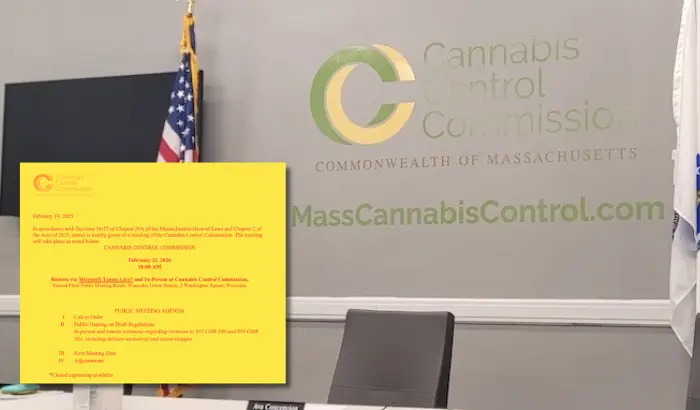


Time and again, the CCC has shown that its independence strengthens policymaking
By Shanel Lindsay, Armani White, & Kevin Gilnack, Equitable Opportunities Now
The Boston Globe Editorial Board is right about one thing in their recent editorial, “Dude, where’s my Cannabis Control Commission reforms?”: Lawmakers should give the Cannabis Control Commission and its new executive director a fighting chance to be successful. But how we pursue that reform will determine whether we protect the agency’s ability to serve the public or open the door to special interests.
Some, including Beacon Hill’s highest-paid lobbyist – the only non-government voice included in the editorial – have proposed placing the CCC under the authority of a single constitutional officer or merging it into an existing state agency. That risks concentrating power in ways that could weaken the agency’s transparency, accountability, and responsiveness to patients, small businesses, and advocates. Those qualities have made the CCC’s policymaking effective, and deeply rooted in public safety, public health, equity, and genuine support for this new industry.
Making the CCC accountable to a single elected official would hand disproportionate power to the wealthiest players and most connected lobbyists — and needlessly politicize oversight of this new industry – while sidelining the patients, workers, and equity entrepreneurs who shaped Massachusetts’ cannabis model into one of the most progressive in the nation.
The CCC’s structure wasn’t an accident. It was modeled after the Massachusetts Gaming Commission, which has successfully regulated another complex and controversial industry. The CCC was intentionally designed to insulate cannabis policymaking from partisan politics and lobbying pressure while insulating elected officials from controversy. Like the MGC, the CCC can make tough decisions grounded in legislative mandates and community input, without having to worry about the next election. The agency’s independence isn’t the problem; it’s what’s working.
We’ve seen what happens when cannabis oversight is concentrated in a single executive agency. Before the CCC was established, the Governor’s Department of Public Health oversaw the medical cannabis program. Delays, bottlenecks, and opaque decision-making plagued the rollout. It wasn’t until the CCC took over that we saw increased transparency, deliberation, and stakeholder engagement.
The Legislature gave the CCC a groundbreaking mandate: Ensure full participation in the cannabis industry by people from communities most harmed by the war on drugs. Independence has empowered the CCC to deliver on that promise, including granting delivery and social consumption licenses exclusively to equity applicants.
Time and again, the CCC has shown that its independence strengthens policymaking. When equity licensees raised concerns about the burdensome two-driver delivery requirement, the Commission repealed it after reviewing the data. They’ve conducted informal comment periods above and beyond legal mandates on host community agreements and social consumption, as advocates (including Equitable Opportunities Now) requested.
Last year, Commissioners updated their Host Community Agreement (HCA) and municipal equity rules based directly on community feedback, including recommendations from EON. The results? Greater transparency, stronger protections against municipal exploitation, and new municipal prioritization for equity applicants. Commissioners read those recommendations, deliberated in public, and implemented them in final regulations.
When public officials raised concerns about the 2019 social consumption rollout, the CCC paused and revised its approach. When labs, municipalities, and industry stakeholders have voiced concerns, the Commission has responded with listening sessions and thoughtful regulatory deliberations. This culture of accessibility and responsiveness is a feature, not a bug.
Reform should strengthen the CCC, not strip it of its independence. Doing so would shift power from the public to the connected — leaving equity applicants, patients, and communities shut out.
That doesn’t mean the CCC is flawless. Reports from Inspector General Jeffrey Shapiro rightly highlight operational issues. The Legislature should act, but with precision:
- Clarify that Commissioners set policy, while the Executive Director and staff implement it;
- Define the Chair’s role as facilitating the five-member Commission’s work, not managing daily operations;
- Clarify statutory references to distinguish between the five-member governing board and the agency itself;
- Better define the process and criteria for removing a Commissioner, while preserving independence and maximizing transparency;
- Ensure leadership continuity during vacancies or absences.
To fulfill its mission, the CCC must also be fully funded and supported. That includes:
- Fully funding its Social Equity Program;
- Launching public health campaigns alongside social consumption rollout;
- Upgrading technology to improve transparency and help consumers find and support equity businesses;
- Adequately staffing enforcement and licensing to ensure effective oversight and timely reviews.
Massachusetts has made real progress in building a fair, inclusive cannabis industry. That progress is fragile. Without independent oversight, it could unravel quickly.
Yes, reform the CCC. Clarify its governance. Strengthen its operations. But preserve the structure that allows it to listen, deliberate, and act in the public interest.