
How the CCC evolved from an all-out booze ban to more careful consideration still short of weed and alcohol commingling
Once upon a time, about a decade ago, before there were dispensaries around the state and early hopeful operators were just getting started, we published a regular column called Know The Regs, as in the regulations governing adult-use cannabis in Massachusetts.
With members of the Cannabis Control Commission advancing their final edit last week of rules that will shape the look, feel, and safety precautions at pot-friendly venues when they finally open more than a year from now, we’re revisiting the educational theme. The regulations moving through the formal promulgation process are complex, and having monitored their drafting process, we can shed some light on the resulting details plus how commissioners chiseled them. (You can read the basics here.)
One somewhat tangential but important topic that’s specifically addressed in the new guidelines is the place of alcohol in all of this. In communicating with operators and experts in markets like California and Nevada where these establishments have been up and running for several years, the message heard by CCC members starting around 2023 was that booze and weed mix like oil and water.
But in time, commissioners along with outside stakeholders increasingly considered the viability of social consumption businesses. And in exploring ways to write regulations that make for increased opportunities at a time when dispensaries are shuttering at an alarming rate, CCC members and supporting staffers revisited the subject of how alcohol and cannabis can coexist in certain establishments and situations.
How commissioners came around on alcohol
When the topic came up in May, Commissioner Ava Callender Concepcion asked what the initial thinking was behind the blanket booze ban. To which Commissioner Nurys Camargo, who along with Commissioner Bruce Stebbins spearheaded the social consumption regulation process, said they’d been concerned about mixing both “in the same places” for public safety reasons. By the beginning of this year, however, they had come to understand “the reality about these spaces and places where these things are going to happen,” and grew more comfortable with the prospect.
The conversation raised countless questions. For example, consider a wedding venue that hosts multiple concurrent parties. If a couple in one part of the place decides to have an infused reception, will that mean they can’t serve alcohol as well? What if there’s a dab bar outside and a vodka ice luge inside? And how about other parties that are potentially planned for the same catering facility—would they be able to have alcohol on the same night that the other couple is having a weed wedding?
Regarding possible changes to the original draft, Concepcion said at the time, “I have some concerns. I understand the public safety concerns and like that there was language about a physical separation, and now we are essentially saying there is commingling. I’m having a hard time formulating how this resolves an issue that was addressed with the original language.”
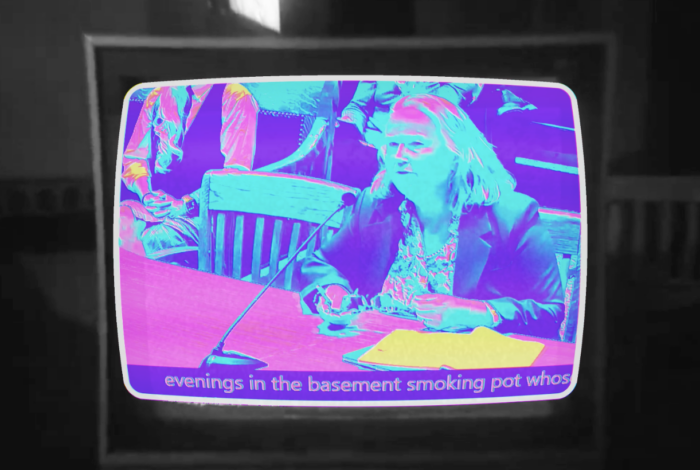
Addressing the possibility of an event where, for example, there may be a cannabis section separated from a drinking area, Commissioner Kimberly Roy asked: “Are we trying to stop the smoke [from entering an area where it’s not supposed to be]? Or are we trying to stop the commingling?” Assuming it’s the latter, Roy said she would be comfortable with there being a physical barrier between the two. Several months and hundreds of hours of redlining later, that’s essentially what the resulting regulations look like. Even with Camargo and Concepcion having left the body, the current members kept up with this line of thinking.
Mentions of alcohol in the approved social consumption regulations
Per the new regs, just like with the old regs, “A Marijuana Retailer shall not sell alcohol or Tobacco.” Furthermore, generally speaking, “A Social Consumption Establishment shall not allow the consumption of alcohol or Tobacco … on its Premises.” While under the Event Organizer category, the regulations state: “An Event Plan shall not be approved by the Commission where there is the planned sale or consumption of alcohol or Tobacco during the same time, and within the same Premises.”
But with a “Hospitality On-Site Consumption Licensee or Marijuana Event Organizer Licensee,” there is wiggle room. In those cases, the license holder (emphasis ours) “shall not allow consumption by Consumers in a space that is shared with another entity serving alcohol unless there is a physical barrier to the Consumption Areas and Premises or alcohol sales are not offered at the same time as consumption of Marijuana or Marijuana Products by Consumers.”
At a media availability following the unanimous vote to approve social consumption language last week, Commissioner Roy described the shift away from the original full ban on alcohol, and gave an example of how a safe split might work under the new rules: “One floor could be alcohol, another floor could be cannabis.” Roy further explained, simply, that booze and bud can’t be in the same exact space, but can exist under the same roof.
Under the new regulations, there will also be a warning about mixing alcohol with cannabis and edibles in particular. It’s pretty obvious and basic stuff, and we probably wouldn’t have even mentioned it, but the warning caught our eye because of the unfortunate hyperbole tacked on at the end (emphasis ours). The fact is that your chance of choking on an edible is far greater than the possibility that you will lose your mind; still, prepare to see the following posted on the counter …
“For Edibles, Marijuana-infused Products, or for Beverages, the warning, ‘The impairment effects of Marijuana-infused Products may be impacted or delayed up to two hours or more depending on several factors, including but not limited to, potency, method of consumption, amount consumed, alcohol consumption, noninfused food and drink consumption prior to and during the use of Marijuana and Marijuana Products, and body-weight, previous use, prescription medication used and tolerance of the Consumer, and may cause psychosis.’”
Of course, the CCC doesn’t regulate alcohol
At the May meeting where alcohol came up in regard to its place around social consumption, Commissioner Stebbins noted that the CCC should stay in its lane. “Our authority only extends so far,” he said. “So we can look at examples of how people want to allow social consumption at a concert venue … or Fenway Park, where there is alcohol consumption … but for me, we have to focus on where we have regulatory authority.”
CCC Director of Government Affairs and Policy Matt Giancola added that any sections of the new regulations about separation could be hard to enforce. He also noted how the state’s Alcoholic Beverages Control Commission doesn’t crack down on licensees in real time, but rather after the fact as instances warrant. One would imagine that is how the CCC will proceed with enforcement around social consumption violations, since in the past it has taken years to process actions against current adult-use licensees.