Retailers “want to have the thing the customer’s looking for, even if that requires acquiring a million dollars worth of inventory that’s not going to be able to sell.”
Put one way, the rather boring way, Happy Cabbage helps cannabis retailers streamline their inventories to “unlock trapped cash” and “increase efficiency.” In a much more gripping philosophical sense, though, the software company is helping pot shops fight one of the common enemies of sellers and consumers: shitty old weed that collects dust, becomes stale, and costs everyone money that’s better spent elsewhere.
At least once every week, a desperate Talking Joints Memo reader contacts us in search of a specific strain they loved and can no longer find. We usually can’t help them, but thanks to Andrew Watson we’re beginning to grasp why menus are so damn unpredictable despite sometimes featuring up to a thousand products. I spoke with the Happy Cabbage CEO and founder about the unique inefficiencies of marijuana retail and what his team sees as the solution.
CF: Like many other companies, you didn’t just start off and say, This is the idea. So just how did your experience lead to this company that specifically works in cannabis?
AW: It wasn’t a simple ride by any means. It never is. I was in the tech scene in San Francisco, actually on the finance side. I worked in finance at Salesforce. I worked in finance at One Medical. I did a bunch of financial analytic consulting type of stuff, healthcare related work, and I was a data scientist.
I was basically responsible for predicting and projecting metrics about businesses. But honestly, I was always frustrated with how it’s hard to see an impact in your work, sometimes, when you’re with a big corporation. And the cannabis scene was growing in California around me, and I’d always had a fascination with it, ever since I was buying dime bags in Palmer City … as a kid.
I ended up getting connected and started doing consulting work and one thing led to another and I just got really sucked in and I realized there was all this data that these dispensaries are sitting on that they could really be using to do stuff, but the data literacy in the industry is not very high.
So that was the idea in the beginning. At first it was like text message marketing where we built that up to a pretty big business, but honestly text message marketing is just a really fucking hard thing to do correctly.
There are a lot of hurdles in this industry, but it attracted you anyway. So when you started, how much data were you able to obtain? Were you able to see the things that got you to the point of really developing the company? Or did somebody let you look under the hood? Basically, when and how did you get interested in inventory?
It was when I was working with dispensaries in San Francisco. MediThrive in SF was like the first people we worked with and it was like, Here’s access to the data.
It was a lot of finding things, and the first thing that I found that really resonated was … at the time everyone was into [the cultivation side of the industry]. But what we started discovering very quickly was the other thing that everyone was sitting on was this inventory data-end problem, which was a significantly larger thing, because 50% of all your money, if you’re running it well, is your inventory expense.
A lot of people were asking a lot of random questions about, Oh, it’d be cool if you could look at the inventory. And so I finally got [access to] an SF dispensary back room and I was like, Oh, shit. Y’all have absolutely no idea how to do this.
What were some of the first giant oversights you noticed? What is sitting in vaults across the country collecting dust every time you look?
The question is what isn’t sitting there collecting dust, honestly. It really just came down to the fundamental thing of you owe this brand money in 30 days. You sell this brand, you owe the brand money in 30 days. The product in the vault that is collecting dust is the product from the brands you owe money, right?
It’s the brands you haven’t been able to pay back, and you’re like, Why can’t I pay this brand back? And the reason you can’t pay the brand back is because the product you had to have sold in order to pay the brand back has been sitting in your vault collecting dust, so you couldn’t have possibly sold it, so you couldn’t have possibly made money, and you couldn’t have possibly paid the brand back. It was literally just the most basic thing around acquiring the amount of inventory necessary to be able to pay the brands on time.
OK, so that’s the basic economics of it. But then there’s also the more nuanced oversight, involving categories. Personally, for example, I go for dabs that are around $40 and that are on the sweeter side and that are not soupy. But even if I go to a dispensary every week for fucking three years, unlike a pharmacy, they don’t have predictive measures. It’s an added nightmare of an industry where the product’s rarely the same twice in a row. So, how do you deal with all of these variables?
The reality is that cannabis has some very interesting data problems about our supply chain that just don’t exist in other industries. And what you’re talking about is a big one, which is like what you just said about the type of dab and concentrate people like. In an ideal world, we would know that for every customer, and we would line up what we’re purchasing at the retail shop against what those customers want to come in and buy, right? And then we’d be good.
But the reality is that every single time you try to get a new product, it’s a whole new strain. It’s a whole new formulation. It’s a whole new, The brand’s trying to push a new gummy line. The brand’s trying to push a new all-in-one. It’s from half-gram vapes to one-gram vapes, and that massive proliferation of product means, to your point, a customer, every time they come into the store, has absolutely no idea if whatever strain they purchased last is available at the store today. And so therefore they can’t have loyalty to a strain within a product. And what ends up happening is that for the store to then figure out what to acquire from the brand, they’re like, You know what sold really well? The Mimosa. They go back to the brand, they say, Hey, can I get more Mimosa? They say, I don’t have that anymore.
But now they have Mandarin Cookies.
Yeah. And then the store goes, OK, I guess I’ll take that. And then as that happens over the course of years, you end up getting 100,000 different products that have come through this store.
It’s nuts how big some of these menus are. When we talk about spreadsheets and how messy these things can get, just give me … blow my mind a little. Like, how many things might a crazy-ass menu have? I feel like you’re Gordon Ramsay going in and ripping that 50-page Cheesecake Factory-like menu to shreds.
Oh, please. I would love it if they were as simple as a Cheesecake Factory menu. The average store has about anywhere from 600 to 1,000 products in stock at any given time.
Really?
Yes. Six-hundred to 1,000, depending on the store, unique different products in stock at any given time across anywhere from 100 to 300 brands.
Is there anyone telling them that’s a good idea?
Every time you ask, what you deal with is the answer of what you were just saying about the guy who wanted the mimosa, right? A budtender goes, Hey, someone came in, was looking for the mimosa, and we didn’t have it, and they didn’t buy anything. And you’ll have that one piece of information lead to the conclusion that therefore, we need to acquire every single possible product that is available—all the time. We want to have the thing the customer’s looking for, even if that requires acquiring a million dollars worth of inventory that we’re not going to be able to sell.
I know your longer-term plan is obviously more proactive with clients and helping them see the light. But in the shorter term, what are your general thoughts on discounts and how those affect the inventory of the clients that you’ve worked with.
I actually take it on the flip side, and what I say is the discounts are a symptom of [bad inventory practices]. When you have thousands of products and you owe money to sell these products back up and you need to get them moving, you need to get them off the floor. You need to turn that into cash ’cause you have bills that are owed and you have a brand saying, I’m not gonna send you more products ’cause you haven’t sent me the cash yet. How do you do that? Discounts. Bundles. Hey, if you credit me, if you give me a deal, if you give me some money, I can then put this on sale and I can get it out. In a $30 billion industry, there are about $6 billion of discounts given out, right? Of that $6 billion, $3 billion of it was, Oh, shit, we gotta get the product moving out the door.
What’s a horror show or something like that which you have completely turned around?
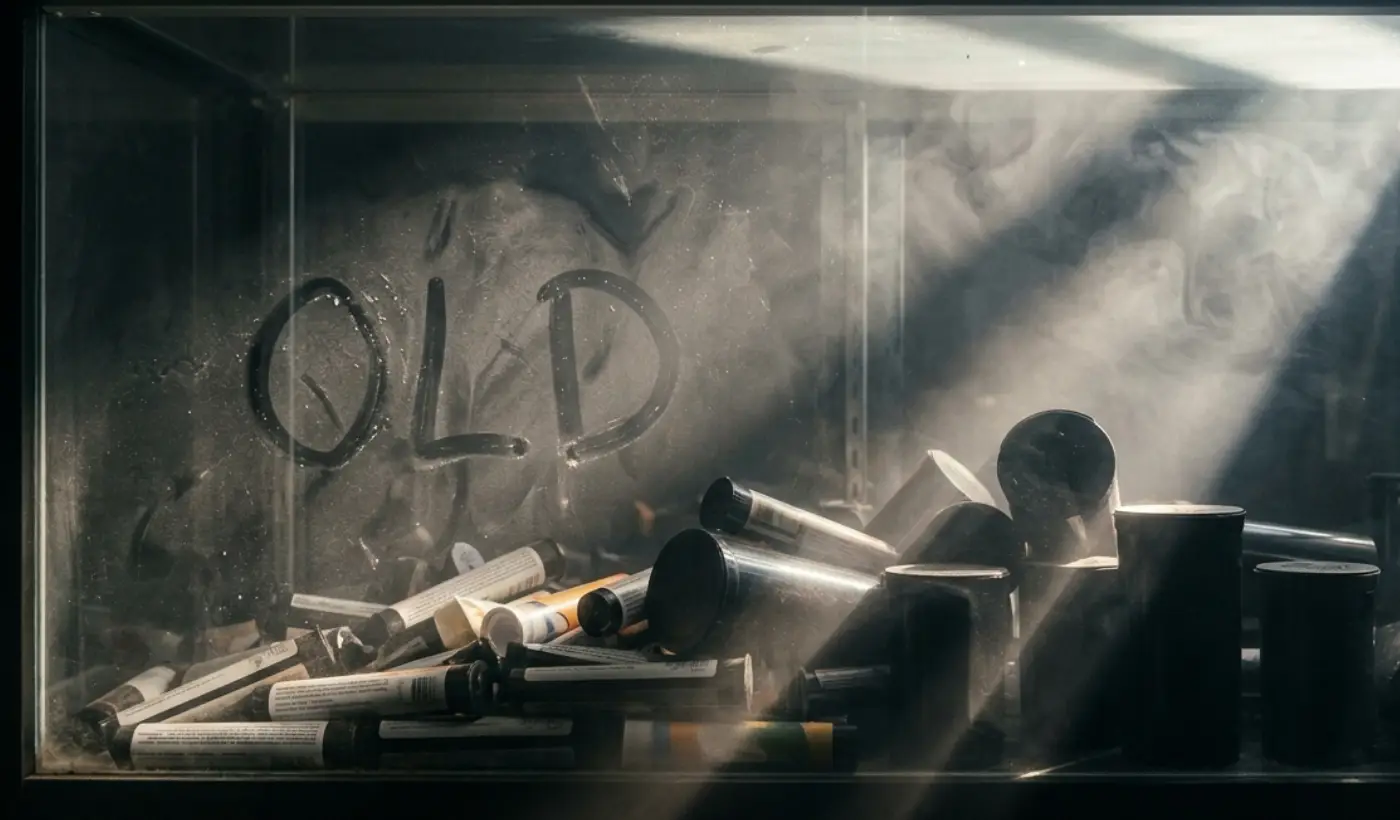
The biggest thing is the aging, the old ass product. I’ve routinely run into 15-store, 10-store organizations that basically have $5 million of product that is over 90 days old, right? Fresh flower that’s just sitting in a room for over 90 days.
I’m happy to say that using our software, using our system and taking our recommendations on that, I can lop a couple million dollars off of that, but that still means they got $3 million of stuff aging and it’s really hard because when you talk to the business owner, you’re like, The consumer’s not gonna like that, right? They’re gonna say, Hey, why is it dry? Why is it weak? Why is it fucking boof? Why when I go here do I have these weak, shitty expiring products, right?
What are the most problematic categories?
The ones that have just too many strains, too proliferated, because it becomes so difficult for people to figure out how much they’re actually going to end up selling. And particularly when it’s something like flower and prerolls—those are actually some of the bigger ones—their aging causes their quality to drop rapidly.
How about something like beverages? They don’t seem to sit around for very long. They often sell out quickly.
Exactly. … I think the other one that people often miss is the smaller stuff, the niche brands. You don’t need 100 cases of highly carbonated niche drink when you have 20 other drink brands, you just don’t. And I think that’s one thing that people mess up a lot.
What kinds of companies have you had the most success with helping with these problems?
We work with a lot of cannabis operations that may be pulling in $400,000, $500,000 of revenue a month. Which is not small. That’s a lot more than a bar would even pull in of the same sort. And again, even that one store that’s a small operation may have 600 products. So it’s incredibly complex, it’s an incredibly nuanced thing to try to figure it all out, and yeah, it’s a lot of spreadsheets that we happily replace.
[Every MSO I have ever talked to does this in Excel.] However, as you start stacking all those locations together and you’re not in the back room and you’ve gone to private equity and they’ve given you a $100 million loan … I have never seen inventory management or procurement management as broken as I have seen talking to some [of the larger multi-state operators].
I would actually say the small operators, if they fuck up a buy, they can figure it out pretty fast. They can be like, Wait. Because if the owner’s in the store and it’s sitting there in the back room, you’re noticing it. You also don’t have an endless supply of cash. So eventually you have to pay the brand back. And that’s the thing, eventually it just eats out at the bank account. If you order 30 grand of product and you only sell 15 grand of it, and then you need to pay the brand 15 grand to cover it, eventually you lose money. Eventually you just go out of business. And a lot of small operators who went out of business, a lot of them who went out of business, what do you find over and over again? Tax liability owed back up to the government, liability owed back up to brands.
Smaller players [are often] strong-armed into deals. They can use our system to more effectively state, This is actually the amount I can sell through my stores from this brand every month. That’s the amount that I’ll agree to buy. Or, If I’m forced to have to buy all this inventory, at least I can find the best possible allocation of what inventory to put in which store at what time.
So I can at least improve the process overall, but there have been some pretty big large organizations exploding on debt. The Cannabist being the most recent one. When you take a look under the hood at what happened to MedMen … you really look at these things and you realize that a lot of it was people playing these kinds of economic games that don’t reflect the reality of consumer preferences and what people are actually going into these stores and buying.
I want to bring it home with a real Mass specific question … with the new legislation [creating a list of delinquent bill payers], do you have any idea what the impact of that could be?
To tell you the truth, I’m a little bit of a pessimist on this. It all stems from the fact that the ones who owe a bunch of money back are the ones who are the worst people at what I’m describing. Which is like they just, they asked for too much product, they were unable to sell it, they couldn’t pay anyone. But there’s still all the other brands and there’s still new brands trying to come in. There’s still big brands in Cali who want to have a presence in Massachusetts, and at the end of the day, if the brands have produced more supply that could fit in all these stores, even if that’s a store that hasn’t paid you back, if I’m a brand and I want consumers, and I’ll convince myself I can get them through this store, and even if that store is gonna be bad on me on AR, at least I can acquire new customers that another brand won’t. And I unfortunately think that incentive is such a major race to the bottom because brands also are just trying to acquire customers regardless, and they’re not making the best financial decisions for themselves either.
Any other thoughts on anything Massachusetts-specific? Maybe regarding the new two-ounce purchase limit? Does that change anything?
It’s all how it rolls back into consumer preferences … and consumer behavior. … At the end of the day, is everyone gonna show up and start just buying? At the same time, even within the limits, we see all the time the death of the half-G vape pen, or the rise of the one-G, right? The death of the low potency pre-roll and the rise of the hash bomb pre-roll, like the death of whatever concentrate, whatever distillate, whatever.
That shit’s always happening, but I don’t know if it’s even as big of an impact as just simple things where all consumers decide to start wanting a different product, over time.