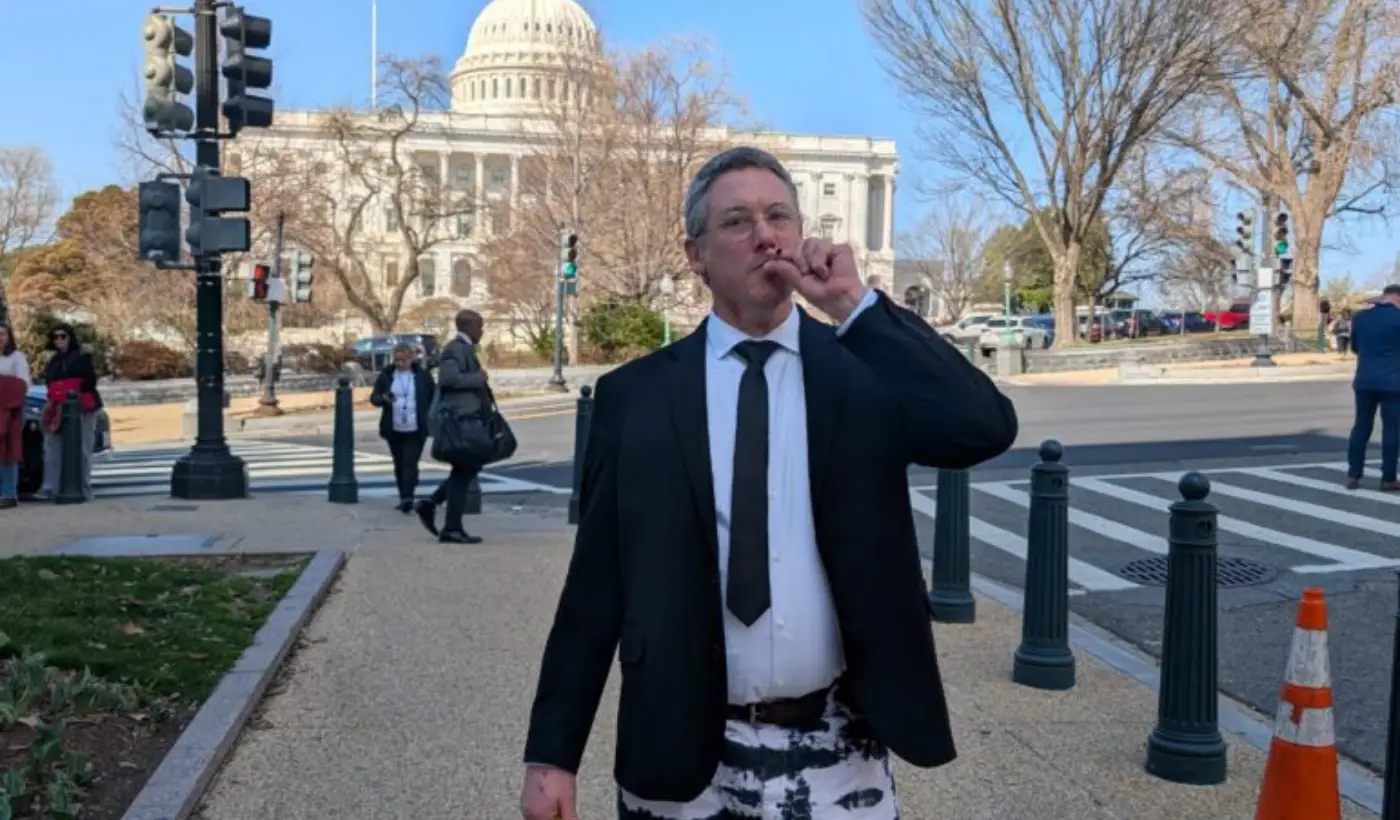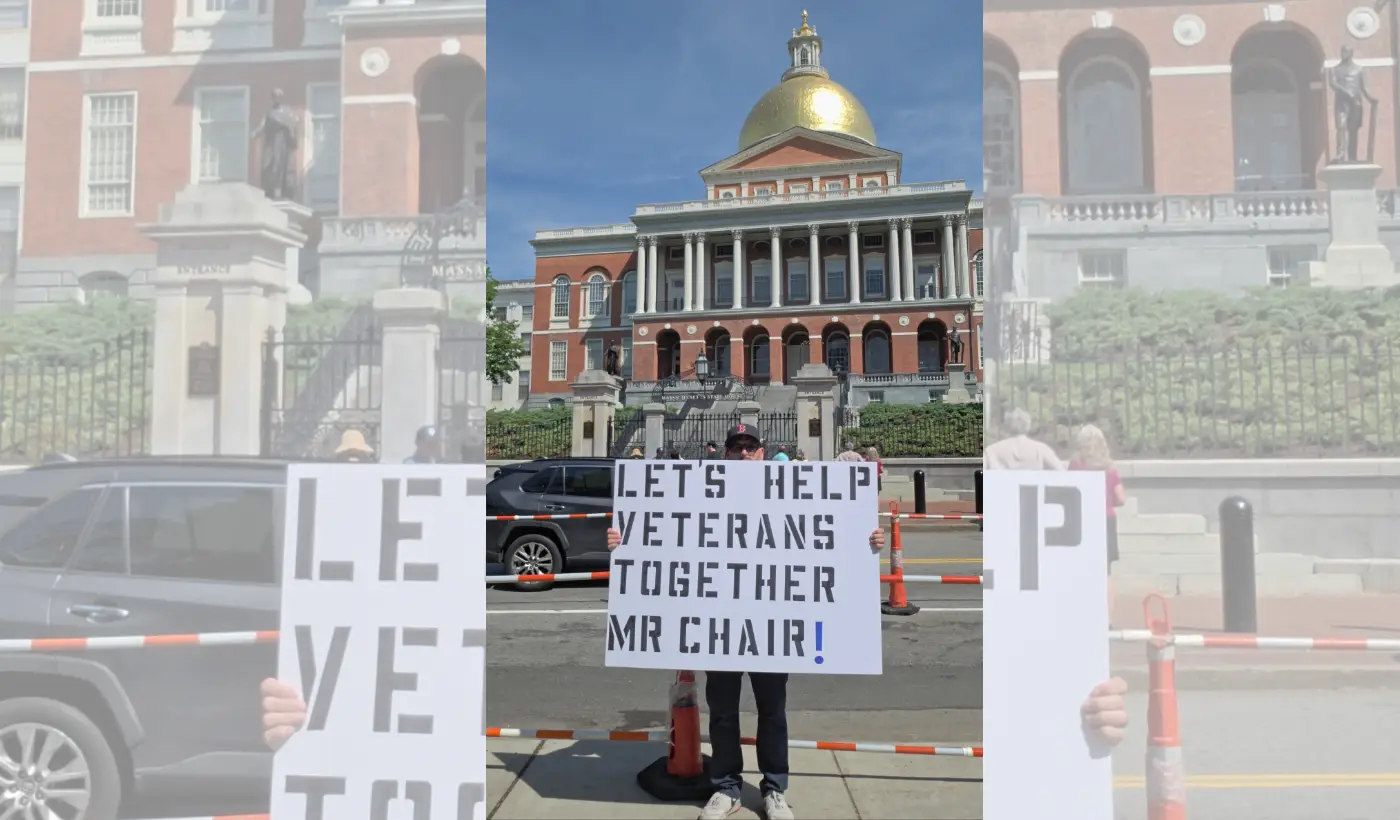

Grant Smith Ellis sounded the alarm about dysfunction at the Massachusetts Cannabis Control Commission. With thousands of supporting documents now public, we had questions for him.
Grant Smith Ellis never doubted that the revelations he’s unearthed about the Massachusetts Cannabis Control Commission over the past few years would reach people besides direct industry stakeholders. The rest of us, however, weren’t so sure.
As a multimedia blogger and sometimes live online commenter during CCC meetings, Smith Ellis doesn’t show up to make friends. His approach is more like Wikileaks than WaPo, and his process of anonymously quoting contentious insider sources and posting private documents has driven the agency completely bonkers. In September 2023, the CCC’s media relations department even went so far as to issue a press release condemning Smith Ellis and threatening those who echoed him.
“The Commission takes issue with the categorization of typical administrative functions of the agency as ‘backroom intervention’,” the unprecedented statement targeting a single writer read. It continued: “The posting of unsubstantiated rumors, based on anonymous sources ‘in the orbit of the agency’ are further evidence of the lack of journalistic values employed by the author who published them. Any individuals, inside or outside the agency, who contribute to the publication of falsehoods about Commission work as fact, disclose private, personal and personnel information of staff, or engage in racist tropes about any employee will not be tolerated by the agency and will be held appropriately accountable.”
Oh how things have changed. It took two years for sunlight to penetrate, but the public can now see that many of the characterizations and even a lot of the scandalous details reported by Smith Ellis were accurate. The proof is right there in more than 3,000 pages of documents and other supporting media like internal emails that surfaced in the long-running legal feud between ousted CCC Chair Shannon O’Brien and Mass Treasurer Deb Goldberg. Smith Ellis has produced multiple posts on the topic, and while many seemed like obscure esoteric tidbits along the way, a bigger picture’s finally emerging.
As things happen in this strange post-social media era, the muckraker and noted nuisance didn’t have a single breakout moment as a weed reporter as much as he’s slowly but surely (and loudly) shown up on and jammed the radar of state regulators over a matter of years. Sure, there was the time when he told GBH that he had to “retreat to a safe house” due to his coverage of a Russian oligarch, but as Smith Ellis promised in repeated posts and heavily footnoted verbal indictments, the real fireworks were yet to come.
I’m sure that some of his detractors will take issue with my giving him a platform to unload without much pushback. That is fair, but it’s also true that Smith Ellis is a critical character in the drama between O’Brien and Goldberg. I’m the first to point out that he has a strange knack for inserting himself into stories; anyone who watched his antics during the trials of Karen Read have seen him literally jump into the fray. But in this case, it was the commission that cast Smith Ellis in a supporting role.
Now that there is evidence that much of the behavior he reported to the consternation of the CCC was in fact taking place, I did what the agency is unlikely to do, and swallowed my pride. I had some questions for Smith Ellis that just needed to be asked and answered, and in the spirit of so much transparency that’s suddenly in season, I conducted the interview on the record. Below is the transcript of our discussion, lightly edited and shortened in some places for clarity.
CF: What’s a good word to describe your feelings over the release? Is it as simple as validated?
GSE: Validated, vindicated, and hopeful that this is just the beginning of the consequences for the people involved.
I wrote that while these documents are revealing, some or even a lot has been out there and I can only imagine that’s how you feel since you’re the one who put a lot of it out there. What are your feelings about the overall release besides just how it affects you?
It’s obviously not national in scope, but the way the press release was done was like an index of the Pentagon Papers. So it immediately took me back to the newsrooms in the [1970s]. And so in all of that context, I was looking at this and saying, Am I appropriately understanding the historical context? And what I saw was an agency in chaos.
What we’ve seen over the past 24 months with the testing fraud with total yeast and mold (TYM) is being exposed. We’ve seen license fees go uncollected or mysteriously unaccounted for. We’ve seen the intervention by the State House. But then to see the reason that Shannon O’Brien was taken out was because she was trying to reform that very thing—it’s like historical irony of the highest order, and it’s exactly what the situation demands.
But let’s start with the surface stuff as to what the treasurer said they ousted O’Brien for. We had already heard about a lot of the alleged behavior, but now that we’ve seen all of these supporting documents and complaints and stuff, what do see the big picture as looking like?
We see a parallel between what happened to former [CCC] Chair Steve Hoffman and what happened to former Chair O’Brien. Hoffman was going to be subject to a complaint of some kind or harassment or something, and he said, I’m not gonna fight it out, and just left.
That opened the door for the people who did that. [Then-CCC Commissioner] Camargo, [former Executive Assistant] Grace O’Day, and others including [Commissioner] Ava Callender Concepcion, to have a chair position they could go for. And when Steve Hoffman said to Deb Goldberg, Listen, Camargo shouldn’t be chair, that put Camargo on the war path, and Shannon O’Brien was her target.
The second Shannon O’Brien came into office, they were ready, in my opinion, to find a reason [to push her out]. And so when Shannon O’Brien relayed a quote from a nonprofit leader innocuously with the word “yellow” in it, or when Shannon O’Brien did anything, they would look for reasons to report her. And they had Deb Goldberg and the US Attorney’s Office under Rachael Rollins and Josh Levy ready to leak stuff to pressure O’Brien to resign. And when she wouldn’t resign, they took her out.
We’re seeing a lot of what you said play out. We’re also hearing about not only the two investigations into O’Brien that we knew about, but there are also mentions of prior investigations. It’s like they started investigating her the day she got to the commission. What do you know of these other investigations?
I want to apologize directly to Shannon O’Brien for allowing [commissioners] Nurys Camargo and Ava Callender Concepcion to manipulate me into publicly attacking Shannon O’Brien over the Greenfield Greenery situation. They absolutely set me up to, from the very day she came into office, weaponize those press conferences against her. Then they banned me from the press conferences the minute I was no longer useful to their agenda and started questioning Shawn Collins.
Okay. So let’s talk about the memo that the CCC published about you in 2023. As far as I was concerned, it was completely unprecedented for any government agency to single out a journalist like that. You said you’re feeling vindicated, but regarding this press release they put out about you, how do you feel that sits in the context of all that we are learning now?
I should be clear about a few things. One, I felt vindicated when my reporting from 2023 was confirmed by WBUR in 2024. Walter Wuthmann reported that [former CCC Communications Chief] Cedric Sinclair was subject to four different allegations of misconduct, and Shawn Collins helped to cover all of them. …
As for that abhorrent promulgation on the CCCs website, I should be clear, [the agency] was not just targeting me for the content of my reporting, it was targeting me for my legislative testimony on Beacon Hill right in front of the [Joint Committee on Cannabis Policy]. That’s disgraceful, that’s a weaponization of government. … It points to something much bigger than just the CCC. It points to the weaponization of our organs of government … for personal political purposes. And they did it at the expense of the First Amendment and journalistic freedom and vulnerable people who now feel that they can come forward and that these people will be held accountable. And that’s what I care about.
Was there anything that you heard from your contacts in the agency that you said or did in particular which sent some people at the CCC over the edge? Or was it more like the full storm of what you were saying?
Two things. My May 2023 reporting about Shawn Collins [and the CCC licensee] Greatest Hits. I think that I stumbled onto something that is explosive and you’re gonna hear a lot more about that.
That’s why Shawn was pissed at me originally, in my opinion. What happened a little bit later though was that I wrote an article with a whistleblower from the CCC who has since moved on who was a high-ranking staff member and it laid out in first-person detail what they had experienced at [Sinclair’s] hand and was enabled by [Collins] and [Camargo] to protect him.
We’ve talked about a lot of the general situations and concepts in play, but regarding the actual documents, was there anything that was truly new to you? Maybe a missing puzzle piece or that really made something click for you?
What was the most telling, and it’s not that it was new to me, but it was that there was this constant reference to family or like being a member of the treasurer’s family. And so that word had this connotation for me, where I was like, Was Collins’ loyalty at the CCC, to the public, to the regulators, to the operators, to his bosses?
Or was it to Goldberg? So that’s I guess what I’m driving at here. I saw this as the CCC being a component of the weaponization of government in this state. And it was really targeted at people who wouldn’t play ball. And I kept saying to myself, Why would anyone, in any organ of government, hear about manipulated [laboratory] testing or serious allegations of abuse or the other things we’ve seen confirmed, and say what’s more important is that Shannon O’Brien has to go so she doesn’t talk about this. I cannot answer that question.
And what do you think was the general reason for some people apparently sweeping big things under the rug? Just to not deal with them? Laziness? Was it to avoid interfering with business as it was going? What do you think?
I think that part of it was this misunderstanding of what would happen in the market if this was either addressed transparently versus brushed under the rug. I don’t think, first of all, they expected anyone to actually bring this all to light. I think from the beginning they expected it to go away. So their calculation was that it clearly won’t affect the market because it’s a money maker. The state depends on the tax revenue. No one’s gonna stop us. Who cares if up to 50% of the products are mistested? It’s a money maker.
That’s what I think was the logic, but if you wanna know why they did it this way, [it was] personal. Camargo wanted to be chair, as did [Callender Concepcion]. And they couldn’t really make it happen.
You mentioned the feds a few times. Can you just clarify what you mean?
So there was a [February 2024] Boston Globe article that frames a leak about the federal investigation of the CCC as if it were about Shannon O’Brien. Whether it came from the [Department of Justice] under Levy and Rollins—who, by the way, you have that history of leaking to interfere in political races—the leak in particular was out of context and so the out of context leak as a political sort of weapon was the M.O. of Levy and Rollins and that DOJ.
And so when I say I think the feds are onto this, I think the feds under the liberal DOJ knew what happened at the CCC but covered it up to protect Goldberg. The new DOJ is run by Leah Foley, who is a member of the GOP. And I’m telling you, it’s juridical open season on Democrats in Massachusetts right now, and they are all gonna get caught up in this. And it goes right to the top. (Ed. note: Hours after we published this article, the US Department of Justice announced that it indicted Suffolk County Steve Tompkins for allegedly shaking down a cannabis company.)
Coverage of the 3,000-plus pages of documents is beginning to come out. What do you suspect most media will screw up and what would you like to see reflected in some coverage?
First of all, I think we have to think about the impacted victims. I’ve been covering true crime a lot lately because I feel that it’s a genre rife with insidious self-interested actors. But what I found is a truism is centering the people who were hurt and the vulnerable. And here we have Shannon O’Brien, multiple staff members of the CCC who were subject to abuse and then driven out to cover it up, and other perhaps members of government that just tried to do the right thing and raise attention about what happened to Shannon O’Brien. They all suffered for it at the hands of a political apparatus that was entirely unchecked and out of control because they were enabled by a complicit Department of Justice in Boston.
Everything has changed. And the headline to me is, New DOJ in Boston. New rules, cannabis commission under scrutiny, reforms, incoming potential indictments. And that’s why we’re seeing the CCC finally start to act as a change agent. Not, in my opinion, ’cause the bureaucratic powers that be wanted to do that, but because the feds are saying, Chaos is coming. You better get your ducks in a row, cross your t’s, dot your i’s, so that when all hell breaks loose, the people who are doing the right thing can prove it.
That’s why I think the CCC is reforming—it is under incredible pressure from Beacon Hill and from the federal government, especially the DOJ in Boston, in my opinion, to get this ship in order. … We’re talking about hundreds of millions of dollars in product that was contaminated. We’re talking about weaponizing government insidiously for personal petty political purposes. We’re talking federal crimes before it all comes crashing down. That’s the headline. This is just the beginning. It’s going to be apoplectic.
That feels like a great place to end, but I did just want to ask how you feel about the Office of the Inspector General of Massachusetts calling for a takeover of the commission by the legislature. Do you see something like that as necessary at this point? Or are things on the right path now? There is of course also a bill that’s currently before the Senate which would change the formation of the board …
There needs to at least be eyes on the CCC, but I would caution against short-term legislative action to reform the structure. I’m not positive that putting it under a unitary appointment authority, such as the governor with a single full-time chair and two part-time chairs is the best solution. …
To the second part of your question, what are my thoughts about the OIG? Let me leave you with a cliffhanger. I think the OIG is great and I think that you would be well served to ask how a potential expanding federal probe that is ongoing right now may have to do with the OIG maybe doing a bigger investigation and finding way more than anyone knows about and the feds perhaps taking it over as a result of a referral. Is that direct enough?