
Will the strangely worded veto referendum to scrap new Mass gun laws confuse the hell out of voters?
As irksome or amusing as one may have found the viral nonsensical nature of “6-7” last year, at least the fad had few real-world consequences.
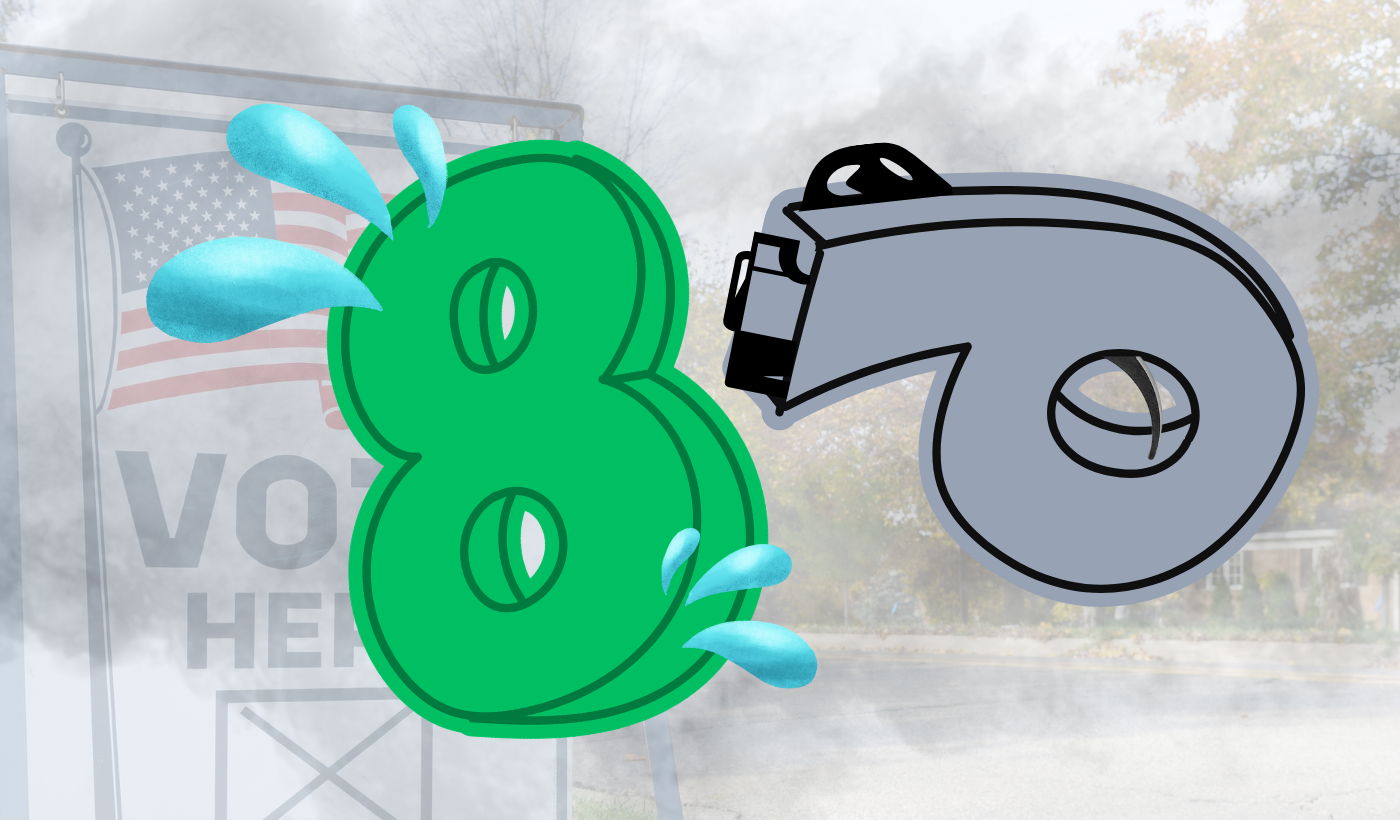
With “8-9,” I’m sorry to report, there’s a lot more on the line. Especially if you have thoughts about whether everyone, no one, or just some people should have access to weed and assault weapons in the commonwealth.
To start, I am still in shock that the question to repeal legal cannabis survived multiple rounds of scrutiny. That despite me being among the first to call out the Coalition for a Healthy Massachusetts for its lowly tactics in lying to voters to collect signatures to secure a spot on the ballot.
Even after all these months, the injustice of it sickens me. But with fewer than a hundred days to go until Election Day, it’s time for everyone to face the reality that Question 8 to Prohibit [the] Retail Sale of Adult Recreational Use Marijuana will appear on the Nov. 3 ballot, whether we like it or not.
What’s been less noted, on a potentially important relatively sudden tangent, is what will appear next to the repeal question, and how the placement and arrangement could potentially impact the outcome of either proposal.
There’s Question 7, which pertains to single-family home development and seems worthy of your consideration unless you’re into hardcore NIMBY kink, but my concern right now is more with Question 9, regarding firearms regulation.
Whatever your personal take is on guns, you should understand the unique situation in play. The background is as simple as it is complex: in 2024, Gov. Maura Healey pushed through an Act Modernizing Firearm Laws. By all accounts, fans of the governor and enemies alike, the legislation fortified what were already the nation’s toughest gun laws, enraging gun people the whole way along.
They pledged to tear the new law down and they got right to business, collecting the signatures for this referendum. (Steve LeBlanc had that story for the AP in October 2024.) And then they disappeared.
But where did the gun thing even come from?
I’m not sure about you, but I didn’t hear a peep about this for years, if I heard about it at all. And it’s happening in a year where the state has a record number of initiatives with nine, one of them being massively consequential for my job as a reporter in the weed world. And while that has been a lot to juggle, at least there’s been some notice, whereas the bomb that landed next to it is also huge for lots of people and, because of the wording and how it came to be, is bound to confuse the shit out of people one way or the other.
A recent post on a South Coast AM talk radio station sheds light on the group’s approach to publicity: “The Massachusetts Civil Rights Coalition, which seeks to repeal the law, gathered and certified the required signatures to bring the issue before the voters, but until recently was unable to tell folks where the question would appear. Knowing the ballot position is important for promoting a position on the issue.”
According to the Cape Cod-based Civil Rights Coalition, which is a group of conservatives against gun control by the way and not a Rosa Parks fan club in case this whole thing wasn’t confusing enough, “the state is using taxpayer dollars to ‘take away your Second Amendment rights’ by funding opposition to the ballot question.” That may be the case, but I’m more interested in how different the routes were that these measures took to the ballot. They may be neighbors, one number away from each other, but 8 and 9 manifested via disparate means.
Indirect vs. veto
The effort to close adult-use dispensaries is an “indirect initiated state statute,” defined as a “citizen-initiated ballot measure that amends state statute.” That means the people who brought it are asking you to vote “yes” in support of changing the law, meaning ending the adult-use cannabis program as we know it. A “no” vote, on the other hand, means leaving the recreational weed apparatus in place.
A so-called veto referendum, like Question 9 about gun rights, works the opposite. It is also a “citizen-initiated ballot measure,” but instead of asking if you want to change the law, it “asks voters whether to uphold or repeal an enacted law.”
The veto avenue is special for a few notable reasons. For starters, you can only go this route if the legislation you are targeting is new. “Signatures for a veto referendum petition must be submitted no more than 90 days after the governor signs the targeted bill or it is enacted into law.” So while cannabis haters couldn’t use this mechanism since that law is a decade old at this point, the group behind Question 9 was able to leverage the veto referendum against the Act Modernizing Firearm Laws, which they hate very much.
In simpler language: A “yes” vote on Question 9 would uphold enacted changes to commonwealth firearm regulations including the “developing [of] an electronic registration system to track firearm ownership” and prohibition on “assault-style firearms.” A “no” vote, on the other hand, would undo all of that.
Are you confused yet?
A brief history of the Mass veto referendum
For those keeping score, there’s also a difference in the threshold to ballot access between these two kinds of referendums.
“In Massachusetts, the number of signatures required for a veto referendum election is equal to 1.5% of the votes cast in the last gubernatorial election.” And for overachievers, “To suspend the law prior to the election, the number of signatures required is equal to 2% of the votes cast in the last gubernatorial election.”
That is compared to 3% of the votes cast needed to advance a citizen-initiated ballot measure like the cannabis repeal, or the initiative which got us legal marijuana back in 2016. In short, it’s easier to kill a new law than it is to axe an old one.
There have only been 22 attempts to crush new legislation through this process in state history. The last try, in 2022, came from a faction taking aim at a Mass law allowing immigrants without proof of citizenship to secure certain forms of ID. The people of Mass voted “yes,” upholding the law expanding access to licenses.
A hundred years before that, Massachusetts Question 4, the Enforcement of Federal Prohibition Referendum in 1922, went the other way. Massachusetts lawmakers had enacted a law to enforce the 18th Amendment to the US Constitution banning alcohol. In that event, the people of the commonwealth voted “no,” as in, Hell no we shouldn’t follow that weak ass law. What followed was quite complicated, but in any case it did take more than a whole decade after that for prohibition to be lifted at the federal level.
Meanwhile, a century later, gun rights activists are looking to catch the same lightning in a barrel. On conservative channels and platforms, their message is resounding, loud and clear: Vote “no” on Question 9 and eliminate these overly strict gun laws.
It’s a diametrically divergent ask from, Vote “no” on Question 8 and keep cannabis dispensaries open. Yet they sound insanely similar, perhaps wildly confusing, even for those who suffered through this explanation.