
Breakdown of $300 million-plus in annual revenue shows how legal cannabis funds recovery and public services across commonwealth
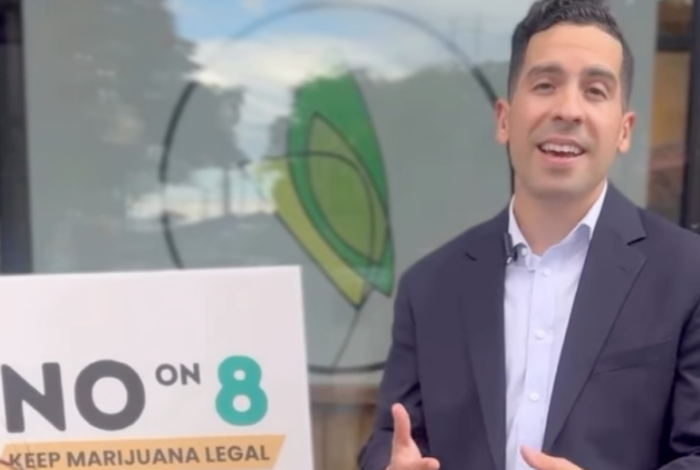
It is now dreadfully close to certain that Mass voters will face a question on this year’s ballot which could end recreational cannabis sales in the commonwealth. Election officials have now officially rejected an objection over the methods that the so-called Coalition for a Healthy Massachusetts used to obtain qualifying signatures. Prohibitionists still have some additional steps to take, and state lawmakers have a chance to take up the cause, but at this point, it looks like the referendum war is on.
All of which means that if you are somebody who wishes to keep cannabis legal in this state, you are now partly responsible for doing some advocacy work. No one really wants to hear it but it’s true—if you’re a smoker, direct industry stakeholder, or even just someone who thinks we are all better off with a recreational program than not, then it’s time to spread the gospel about why grass should remain legal in Mass.
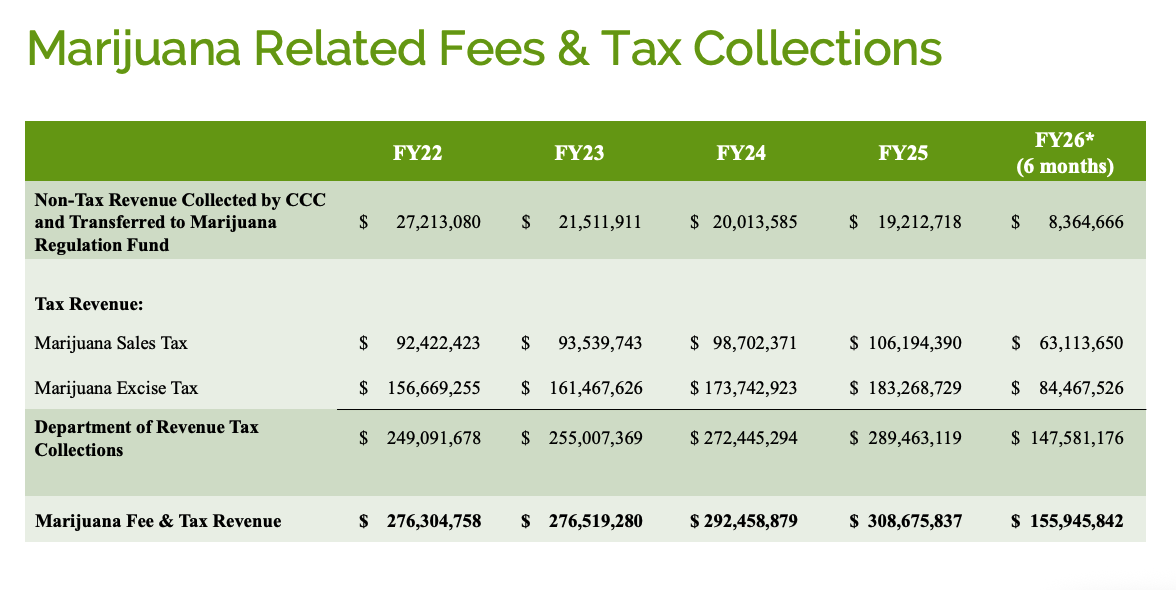
A big part of the movement to combat lies told by the goons trying to repeal adult-use should be educational. For example, explaining where the hundreds of millions of dollars in annual cannabis tax revenue actually goes. In a presentation of its FY27 budget request at last week’s public meeting, the Cannabis Control Commission shared a bunch of numbers that are useful in this regard.
Where the money comes from
In FY25, the non-tax revenue collected by the CCC and transferred to the Marijuana Regulation Fund was just over $19 million. That’s largely from operator licensing fees. Then there is revenue from the state’s marijuana sales tax, plus the marijuana excise tax, the sum of which was nearly $290 million last fiscal year. In total, that’s more than $308 million—from weed!
Where the money goes
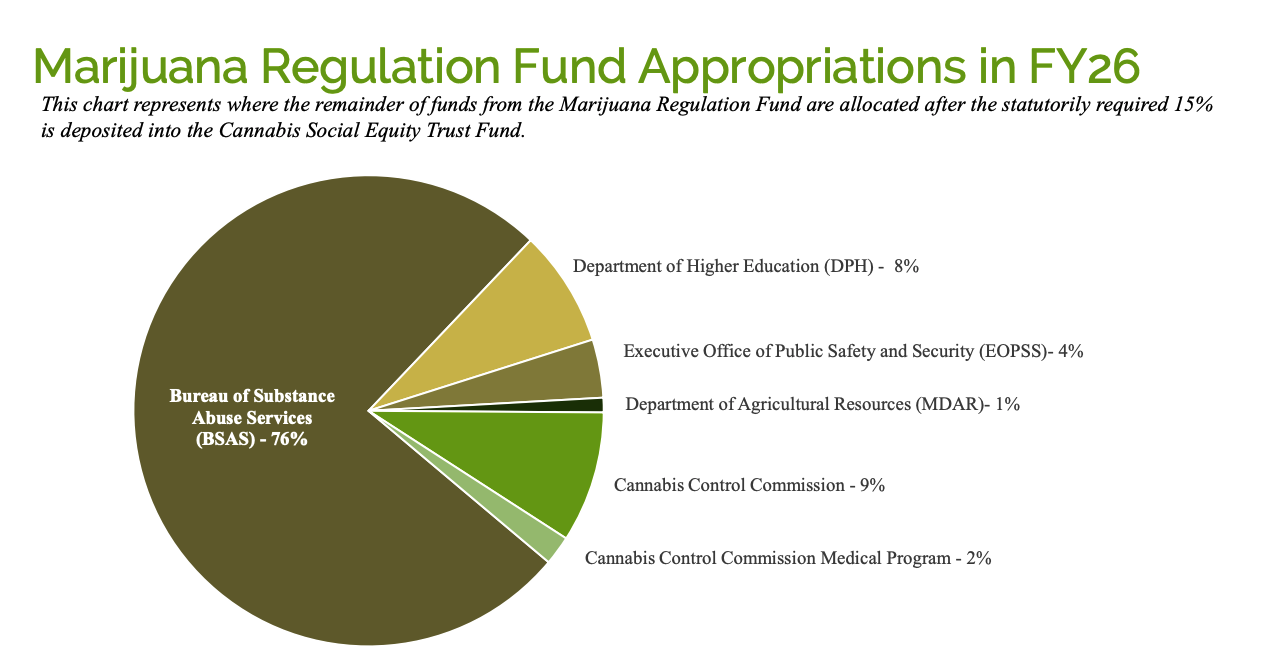
By statute, 15% of Marijuana Regulation Fund money goes to support the Cannabis Social Equity Trust Fund. After that, 8% goes to the Department of Higher Education, 4% to the Executive Office of Public Safety and Security, 1% to the Department of Agricultural Resources, and a massive 76% to the Bureau of Substance Abuse Services.
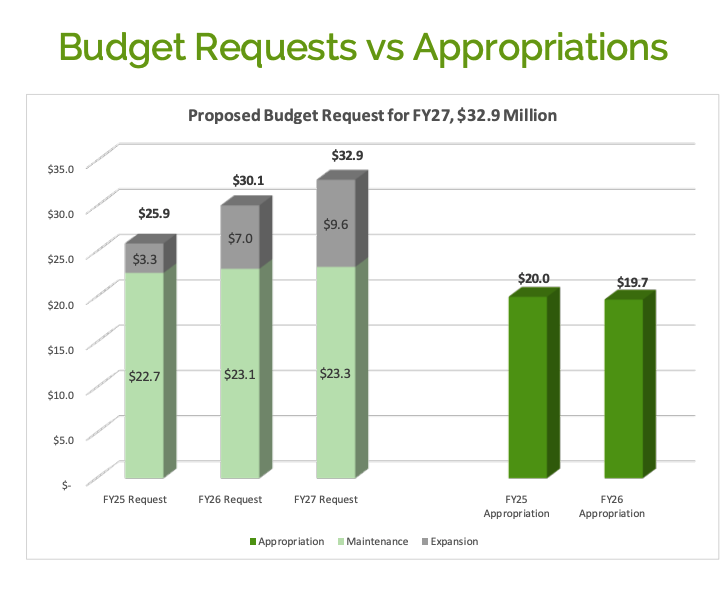
That leaves only about 11% for CCC operations. The agency has certainly had management troubles and worse, but in evaluating criticisms of the commission from those seeking to repeal recreational cannabis, one should consider budget requests versus appropriations. In FY25, for example, the demonstrably overburdened CCC requested $25.9 million from the legislature and received $20 million. It didn’t get better the following year either. The chief financial and accounting officer and director of budgeting wrote in the FY27 request …
“FY26 Funding received was $3.1M below the Maintenance funding that was requested. Payroll costs were reduced $3M by freezing 11 positions, delays in hiring and delays in implementation of COLA increases. No expansionary funding was available to allocate to upgrade IT systems or Public Education Initiatives; [Social Equity] Program funding was reduced.”
And there’s much more where that came from.