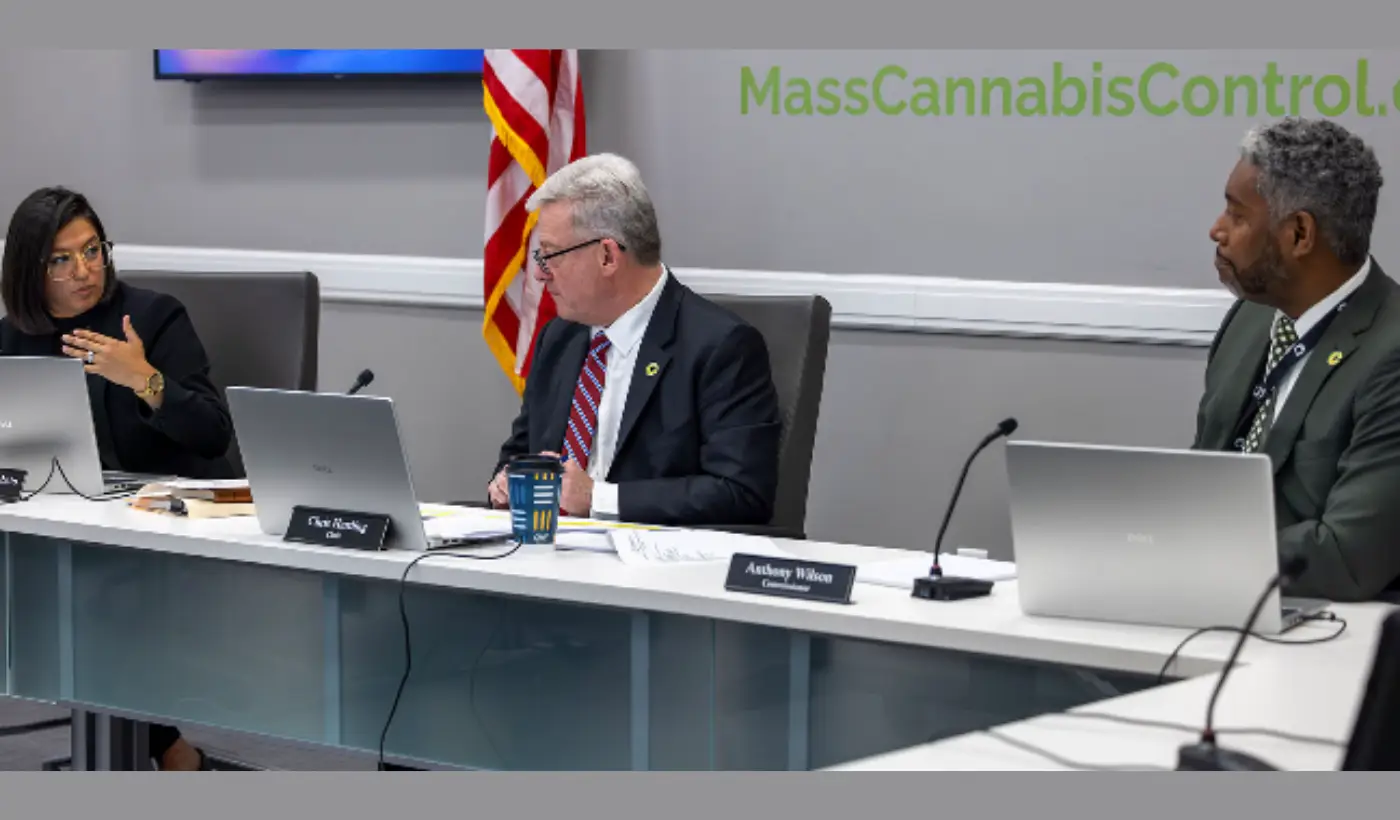
The new members of the Cannabis Control Commission don’t exactly have a lot of wiggle room when it comes to their immediate priorities list. Among the many other items they found on their desks upon being appointed by Gov. Maura Healey in May was that regarding Ch. 65 of the Acts of 2026, and the new “regulations to increase license ownership caps and daily purchasing limits.”
Aside from my rant about how the expansion of the number of licenses a single entity can own became a literal “emergency” priority over issues like worker safety and testing, here’s what they got done at Wednesday’s public meeting. -TJM Editor Chris Faraone
The following is from the CCC:
Ch. 65 gave the Commission 60 days from when the governor signed the law on April 19 to increase the Adult-use retail license cap from three to six licenses. Under the statute, however, only Social Equity Businesses (SEBs) are eligible to receive a sixth retail license during the first 12 months after the Commission begins accepting applications pursuant to Ch. 65. During that 12-month period, the Commission may not grant more than five retail licenses to any licensee that is not an SEB.
Although daily purchase limits increased immediately on April 19 from 1 to 2 ounces of cannabis, Commission regulations under 935 CMR.500 will now be updated to formally reflect the increase.
“The Commission is moving quickly to update regulations to meet a specific deadline within Ch. 65, but this is just the beginning of a comprehensive policymaking process that will unfold over the next year,” Commission Chair Chris Harding said. “Ten years after voters approved an adult-use cannabis market in Massachusetts, today’s update and those coming in the future will ensure access to a safe, equitable cannabis industry for consumers, patients, business leaders, and taxpayers well into the future.”
“Starting in the fall, Commissioners and staff will make additional regulatory policy updates prescribed by Ch. 65, and other initiatives, like working to modernize cannabis testing protocols and considering revisions to the Medical Use of Marijuana Program in light of federal rescheduling,” Commission Executive Director Travis Ahern said. “The important regulatory amendments made today begin a period of intense work toward modernizing the cannabis market in Massachusetts.”
Following Wednesday’s unanimous vote (3-0), the Commission will file the emergency regulations with the Secretary of the Commonwealth. The regulations will be in effect temporarily for three months as the Commission completes the public comment process, which will include a live public hearing on July 30 and a public comment period to receive written feedback from July 3 to July 30. Compliance with the public comment process will make the emergency regulations permanent.
The emergency regulations approved Wednesday will:
- Allow SEBs—businesses comprised of majority ownership of individuals who are Social Equity Program Participants or Economic Empowerment Priority Applicants—to possess up to six retail licenses;
- Allow non-SEBs to possess up to five retail licenses for the first 12 months after the Commission begins accepting applications;
- After the 12-month period, non-SEBs may be granted up to six retail licenses;
- Grant a single licensee the ability to hold up to three fully integrated Medical Marijuana Establishment licenses;
- Increase the amount of financial interest a person or entity can hold in a license without being counted toward the license cap from 10 percent to less than 20 percent, so long as that person or entity does not otherwise have direct or indirect control, such as being an executive or voting board member;
- For background check purposes, regulations will still require persons or entities with 10 percent or greater financial interest in a license to meet suitability standards;
- Exempt a person from license caps who is acting only as a trustee during the sale of a marijuana establishment or medical marijuana establishment through an Employee Stock Ownership Plan (ESOP).
Once the emergency regulations process is completed, the Commission will continue to update internal infrastructure before it can accept new applications related to the increased license cap.
The Commission anticipates amending regulations again in the fall to make policy changes related to other milestones in Ch. 65, plus other initiatives related to testing protocols and the Medical Use of Marijuana Program.