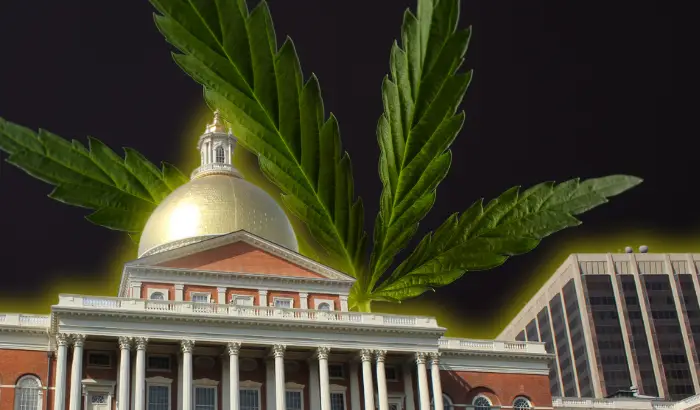

But cannabis took that title years ago, so what gives?
As a reader and reporter and a big fan of the facts who has a kid in public grade school, I struggle with the question of how to address the nonsense that sometimes comes home in their work folders.
For example, since I don’t live in some totally woke urban enclave, they’re still teaching the fairy tale version of the first Thanksgiving, while glossing over Christopher Columbus without any mention of his savagery.
In those cases, I try to teach my kid the truth while imploring them to humor the teacher. Just give ’em the answer they’re looking for, I say. Know the facts, tell your friends at lunch, but there’s no real need to aggravate Mrs. Krabappel—certainly not on my behalf. The movement toward clarity on that front, I’m happy to report, already has lots of momentum.
But this time, I had to put my foot down—on a big pile of cranberries. Which despite what is taught at my child’s school, are not by any measure the top crop in the commonwealth. The discrepancy is less important than one’s understanding of this country’s past, but it’s something I can personally explain much, much easier, and that my kid can maybe help clear up in class without becoming a social pariah.
Frankly, the chasm between this agricultural truth and what’s probably still taught at most schools in Mass is as wide as that which separates the real plight of Native Americans and your typical pre-school Thanksgiving stage play deep in the exurbs. It has been for more than three years.
In November 2022, the Massachusetts Cannabis Control Commission announced the historic toppling. Citing a report from Leafly (rather than internal numbers for some reason), the agency wrote in a press release that “the dollar value associated with adult-use cannabis products in the Commonwealth is $361 million,” while “The next highest ranked is cranberries, pulling almost $66 million in 2021.”
The gap has only widened since. Even if you attempt to account for the vast differences between cann and cran, like how the latter is rarely sold in dual-chamber vapes with collectible packaging, there is no contest.
According to the USDA’s 2024 agricultural overview of Mass (the federal agency doesn’t track cannabis farming), the total value of cranberry production for last year was about $78 million. Cannabis eclipsed that sum in any given month, with adult-use sales reaching ten times that total in the first half of 2025 on the way to another billion-dollar year.
I understand that textbooks and worksheets can be outdated, and I don’t think that my kid’s school or any other has bad intentions on this front. But stigmas and misinformation around cannabis have caused enough damage. If we teach the simple truth that cannabis is the top crop in Mass, and maybe even told kids that tens of thousands of their parents, uncles, and aunts earn a living growing and selling the stuff, it could go a long way towards normalizing a substance that has harmed infinitely fewer children than ignorance over the course of American history.