
Pt. 1—Budgets, staffing, social equity, the Massachusetts Medical use of Marijuana program, and the ballot initiative to end recreational cannabis
It’s been roughly seven months since Travis Ahern filled the long vacant and critical executive director role at the Massachusetts Cannabis Control Commission. Coming with municipal as well as state government management chops, most recently as the Holliston town administrator, he appeared from the jump to fit in well, and to desire zero part of any hairy headlines or histrionics hampering the agency.
We interviewed Ahern soon after he was picked for the position, and followed up with him last week for an entire hour. The ED is extremely candid, and entertained our every question, making for a seriously sizable transcript. The resulting q&a was trimmed and edited for clarity in certain places, but since Ahern said a lot of things that Mass industry stakeholders likely want to read down to every detail, we’re publishing the whole thing, in two parts.
The first installment is below, covering subjects including an agency hiring freeze, and next week we will publish the second half, in which Ahern addresses hemp product regulation, worker safety, social consumption regulations, and the hot button topic of lab testing.
CF: How has it generally been going so far? What’s your commute like? How’s the routine?
TA: It’s been a really nice transition. Personally, I think I live in the Metro West area, and we have to do business quite a bit at the State House. We have a small office in Boston that allows us to kind of set up there when we need to. So, I can take the train into Boston when we need to be there, and otherwise I’m driving out west which is kind of a reverse commute to Worcester. … Union Station’s great. I have a lot of family on the South Shore. I worked on the North Shore in Danvers, my family’s in the Berkshires, Central Mass, and I live in Metro West. So, Central Mass was always kind of my blind spot. So, it’s been nice to get to know Worcester.
When we spoke last, you had hoped to … minimize headlines and kind of get to work. How’s that going? Are you able to keep your head down and how does the press in general, whether positive or negative, impact the work of the commission?
Ultimately my approach and where I want us to be in the long run is a relatively boring regulatory agency. The ABCC (Alcoholic Beverages Control Commission) does not make headlines. At the same point, the ABCC’s been in existence for 80-plus years. We’ve been in existence for eight. It’s a new industry. There are all of the other things that go with the industry that we’re in, which is federal illegality, schedule changes, hemp. And so, ultimately the answer is we’re not in the position to say we’re going to be out of the headlines.
The most recent news, [the return of Chair Shannon O’Brien], is obviously of great interest, I understand that. I think you were in Worcester with us on Wednesday. … Chairs change. I dealt with that my whole career, municipal and state. And so it takes some time for us to adapt, make sure that the chair is comfortable with everything in that role, and then we keep doing the work. So we’re just in a bit of a transition period here. … I look at it as an opportunity to make sure that we dive deep into the feedback that we receive from the industry, external stakeholders, and then keep the work going.
There’s a new social equity cohort. What are your thoughts on the program and where it is headed?
We’re looking to really build on the Equity Works platform. I think it’s going to be great for people in any stage of where they’re getting in the industry. … As it relates to this cohort, I think we ended up with 192 submissions as it closed at 5:00 on the 30th of September. So, we’ll take the month of October, review those against the criteria. We’re hoping to see changes in that space as well.
I believe that the EOED [Executive Office of Economic Development, which administers the Social Equity Trust Fund] has had some discussions. … I believe that they indicated they’ve got about $25 million as appropriated in January that is not impacted by anything going on in the federal government or state government. So, they are looking to move ahead on their timeline. And so all of those things are great. I think ultimately the other thing I would just put as kind of like an overarching [discussion about] where are we going with equity? Certainly the commissioners will have discussions in the context of anything that we feel needs to be updated to modernize regulations.
Look at the House Bill 4206, it’s not backing off equity, right? It’s doubling down. While there might be some reverberations at the federal level, the state of Massachusetts is not backing off of equity. We take that seriously, and there’s opportunities for commissioners to look at the regulations and see what we can do to improve.
Next, medical. The program really is, I wouldn’t say on the ropes, but has its issues. In general, what do you think the sector needs right now?
I think the biggest pivot point that we’ve always known, certainly the Cannabis Advisory Board has always been pushing this as well … vertical integration has always been the key word. This is what we inherited from DPH [Department of Public Health]. We’ve obviously had discussions with DPH on the intent behind that and where we may be going. [The removal of the vertical integration requirement for medical operators] is included in House 4206, but I think there’s always been a question of whether or not there is a need for a legislative fix or if this is all regulatory.
With the division of power [and O’Brien back as chair], everybody’s kind of figuring out what their roles are way more than used to be the case. You can only do so many things. Is there something, whether it’s HR or whatever, where you can kind of not be completely present all the time so you can focus on other things?
I think we have a great leadership team that I’ve had the opportunity to work with. … I work with all of them, but ultimately I trust them all in the realm that they work within. Our CFO, Lisa Schlegel, has a lot of experience within the state and has been phenomenal, and on all of those things I mentioned earlier, can lead on any of those things and doesn’t require my handholding by any means.
My concern is less the ability to hand off any of these things or work through those folks. It’s more that it’s also my role to make sure that they have what they need to be successful. And that’s where, from a staffing perspective, from a resource perspective, I can’t just look them in the eye and say, We’re giving you what you all need to do your job as best you can. And that’s where I’m uncomfortable at the moment. But that’s not something that is anybody’s particular fault. It’s something that we have to continue to work through.
HR-wise, I know there were a lot of [unfilled positions], especially when there was turmoil. How do you feel generally speaking about the hiring situation right now? Any openings that are worrisome or that you really need to get somebody in there?
At a high level, my approach was kind of a deep dive into the HR policies to make sure that we are as modernized and appropriate as possible. We’re kind of doing that in phases with the assistance of an employment counsel that may be different from the one my predecessor would have used.
As it relates to our specific hiring and those types of things, obviously we have been impacted by our budget. So my biggest concern right now is that I have about eight positions that have been caught in a hiring freeze. I have no clarity that we’ll be able to post those. And those positions quite frankly go through a number of different departments. We talked about equity. The equity program and community outreach department has one position in the freeze, for example. We have numerous in communications. We have numerous in other departments as well. So, right now, I think we’re relatively steady, and yet my concern is if we’re unable to address our budget situation, that may exacerbate timelines of when we can turn things around.
We’re trying to stay as fully staffed in enforcement and investigations as possible. But I can only prioritize that so long as we continue to move forward on our funding. So we are continuing those discussions with the legislature. From a bottom line perspective, I have felt comfortable with the talent level that we have in this organization, and my concern ideally is retention, because we have lost some folks. Some of those folks that are in the hiring freeze, for example, left the organization to go to other state agencies. So, we need to be competitive to not lose our folks to other state agencies.
We might as well just go right to the budget then. You’d mentioned rethinking some priorities, reshuffling, and also some other potential money buckets. What are we going to be seeing in the next couple of weeks? What are some of those moves that you’re making?
I would say the wiggle room is gone. We’re in the couch cushions at the moment. And so, what we’ve done is try to make sure that everybody has what they need to do their jobs, and we’re certainly up against it. So, I’ll kind of give you three buckets here.
One, number one priority for me, always clear, was we have two IT platforms that need substantial work. One is the medical program platform that we inherited from DPH that was not funded in the FY25 or 26 budget. We have requested that funding from EOTS, which is the executive office for technology, and that application was actually presented recently. So we’re hoping that that will allow us to move forward on either substantially improving or replacing that system that would impact our patients, the medical provider. It would impact the data that we have internally, the amount of manual work we put into it.
The other major system that impacts everybody is our licensing platform. All the data that folks want on licensing that we could have available at the drop of a hat, we can’t do with that system right now. So we either need to substantially enhance it or replace it. That one is probably going to have to wait because of funding. But we will ask EOTS for that and we’ll probably put that in our FY27 budget. So that’s my biggest thing. We will do anything we can. We’ll work with anybody to fund those things.
As it relates to our operating budget, we currently don’t project to get through our current fiscal year, which is why the hiring freeze will remain in place until further notice. And we are scrounging. So, we will be submitting an FY26 supplemental budget request with some very specific items that are really just to get us through the fiscal year. It’s the priorities that everybody knows: testing. We have engaged consultants to update our protocols, make recommendations to the commissioners to update our protocols, regulations, etc. We addressed the engagements at the end of FY25, but to further that, we really need funding to continue to do that and the work of testing. So, we’ll ask for that. We’ll ask for some additional resources for the technical assistance and training programs I mentioned for the SE program. We’ll do some of those things and then also just again to get us back to being able to keep our staffing at a reasonable level. We’ll ask for some additional funding for that.
And then the next thing we’re pivoting to is FY27. And so for FY27, you got to think we got $19.7 million in this current fiscal year. We asked for $30 million based on what we felt was our needs. So that’s about 66% of what we requested. We on top of that now are implementing or will be once at the end of promulgation, three new license types for social consumption. So we have to include that in our FY27 request, but also start to implement prior to having that funding. So it is adding three newer license types on top of our existing staff, which is already a difficult thing to do, and then also building that into our FY27 request. So we have a lot of things going on. We are looking to work with anybody outside of our operating budget, such as EOTS on the IT platforms.
We’re going to request funding to get us through this fiscal year so I don’t have to have delays for licenses and the public and we can maintain public health and safety etc. And then we’re building the FY27 budget looking at social consumption, and we’ll probably have to then come back whenever the House bill moves forward because the House bill talks about massive expansion of our mission with intoxicating hemp.
Do you have expected licensing fees for social consumption built into upcoming budgets? How do you project that?
FY26 we’re in right now. FY27 will start July 1st 2026. And so to answer your question specifically, everything that we receive—all of the excise tax revenue, all of those types of things—that all goes to the MRF [Marijuana Regulation Fund] directly. We don’t touch it. It goes through the tax revenue from purchasing cannabis. We also collect fees. We also have stipulated agreements that sometimes have fines. All of that additionally does not go to us. That also goes to the MRF, and then we get an appropriation. So the biggest issue right now is we will put together the entire fee structure, do everything related to social consumption license types, but we won’t touch that revenue. It will go to the MRF, and we’ll get an appropriation.
We’re trying to make sure that the legislature understands that to add on this work, we need the resources to do it, and then it’s going to generate additional revenue. … Mass Budget just basically did their own external analysis basically to say, From an equity perspective, what is the revenue from cannabis doing? Because if you look at what the MRF is funding, we’re 10% of what the MRF is funding. What they’re funding is BSAS, which is a substance abuse program. It’s funding programming at a bunch of different state agencies, which is all great. I think it answers a lot of people who may be looking at the future ballot question on should we recriminalize and saying, Well, the good that’s coming out of cannabis revenue. It’s probably not something people want to give up.
What is the commission’s relationship with Beacon Hill right now? I know when you first came on, the relationship seemed pretty good, but the money didn’t follow. How do you feel about the relationship with the Joint Committee on Cannabis Policy and in general?
It’s been incredibly upbeat. My experience so far in my first six months was going up there with Commissioner [Bruce] Stebbins in his role as acting chair. And so, we completed quite a bit of information sharing with a number of folks on the joint committee, but also on other committees like public safety because that will be important for social consumption. He and I sat down, for example, with the state auditor after the report because we’ll be closing that out over the next six-month period. That’s how that works. I’ve sat down with the inspector general, for example, around the time of his report. Ultimately, the answer is we just want folks to know that we’re accessible should anybody need us.
Certainly, the House was looking for feedback from a variety of folks, including us, on the House bill that ended up being 4206 as it came out of House Ways and Means but had multiple iterations. So ultimately the answer is now I’m going to pivot and be going up there as well in the future on needs with Chair O’Brien, and I think that that will hopefully continue to move us forward. I think we’ve done a lot of relationship building since I’ve been here, and I’ve been very impressed with the knowledge up there about what it is that we need, and yet to your point, it hasn’t followed through with the dollars yet. I am hopeful that now that we’ve resolved the matter of the chair, that hopefully people will begin to look forward to it and that we’re able to do that.
We’ve heard over the years, and I’ve covered other agencies, that people do redlining of regulations differently. People do the editing process differently. You guys are super transparent with a lot of the boring stuff. I was wondering as you’re looking to potentially truncate the process. Where can some efficiencies come into place?
I think right out of the gate, what we were able to kind of jam into, so to speak, the social consumption round here, was the badging issue. So, understanding that that was impacting everybody, including us, on a relatively short timeline, got some fixes for badging into this package that we’re hoping to finalize for regs with social consumption, badging, etc.
Commissioners have raised what they feel needs to be cleaned up because it’s what’s impacting them the most with complaints from constituents. We have kind of an internal list, and I’ll just tell you right now, I prioritize cleaning up what has been just an absolute time suck for them and the most complaints from the industry: just trying to address the advertising regulations. It needs to be streamlined. … These are the things that are costing us work that don’t make sense for businesses or for us, the industry. So, cleaning up some of those initial regs.
We had a framework that was created, and it needs to be basically modernized. S… We’ve obviously had informal and formal comment periods that we’re hearing from the industry on what the priorities are. So, if we can go in and really clean up the regs, I think that’s going to take a lot of the onus off of what is wasting time for our regulators.
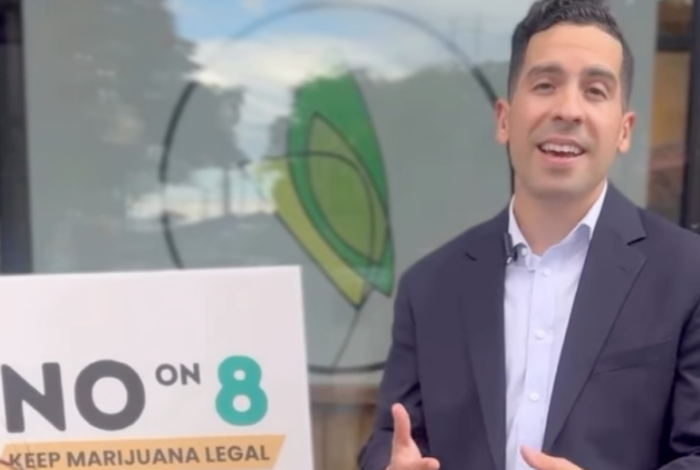
I can’t even believe I’m going to ask about it, but the proposed ballot measure, any thoughts?
I think generally we don’t advocate for or against the policy specifically as it relates to a ballot question. I think again, I’m happy that we had, for example, the budget report come out so that it is covered by somebody other than us. Certainly, I think that report and demonstrating the good that has come out of the funds, the revenue received through cannabis, the success of cannabis taking over cranberries as the number one cash crop, and tax revenue over alcohol. And where that revenue is going, that’s highlighted in the report, again, to BSAS for substance abuse, to other agencies that deal with substance abuse.
I think ultimately I’m happy that we have other things that can lead the way where we may have to kind of remain silent. So that’s kind of where we are for the most part. At the same point, from where I’m standing as somebody who voted to legalize, to me, this is the number one guiding light. I have nothing against folks who like alcohol. I personally gave up alcohol at one point in my life just because it was better for me. But I cannot justify as a public policy individual how alcohol can be legal and adult-use cannabis cannot be. It just does not logically track. And I believe that the people of Massachusetts agree with that.
Part 2/2 coming next week, in which ED Ahern addresses major issues including lab testing and social consumption.