
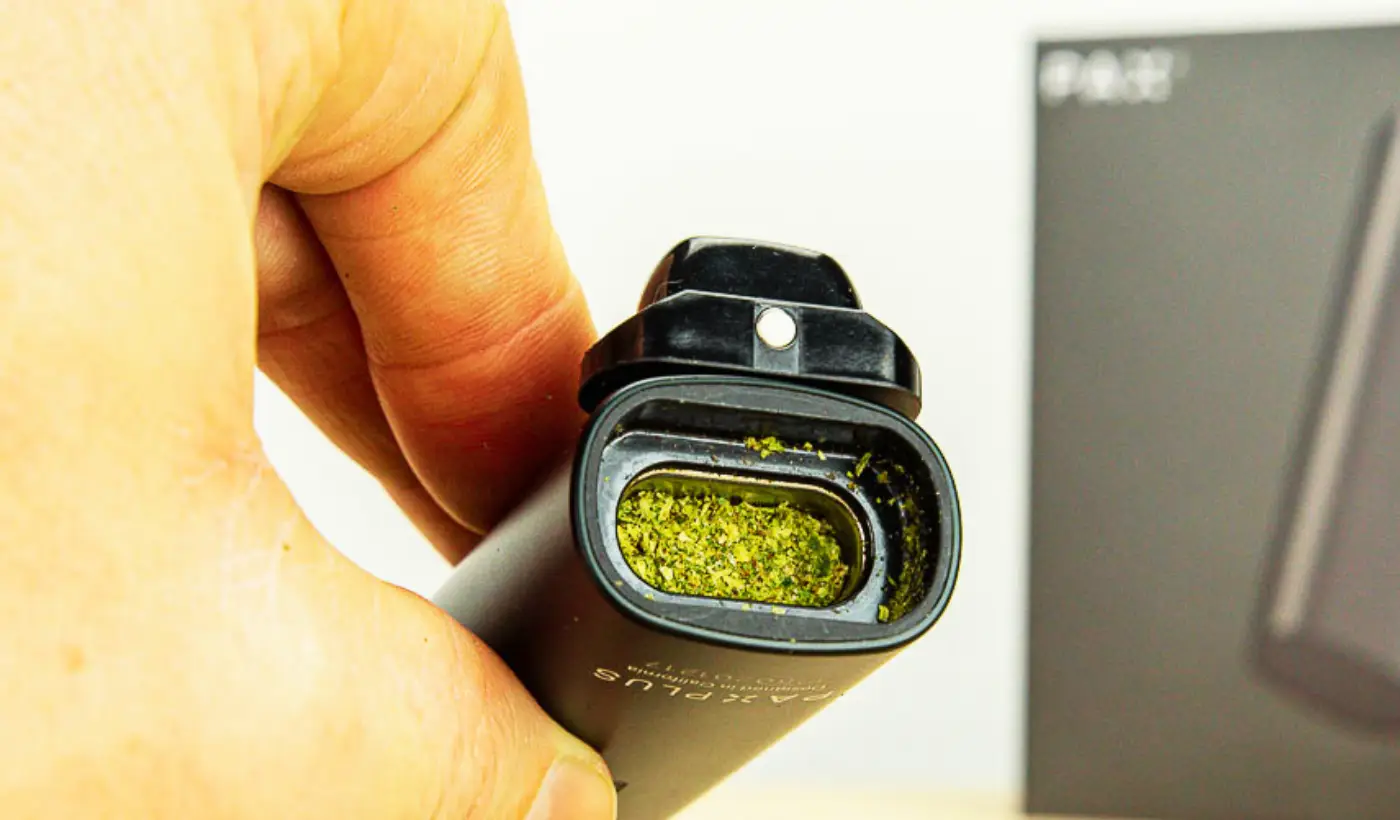
Industry analysis found “vaporization of cannabis flower reduced exposure to these harmful compounds by up to 99 percent compared with joint smoke”
Vaporizing herbal cannabis significantly reduces the production of combustible smoke and associated chemical byproducts, according to data provided by scientists at Pax Laboratories.
Scientists compared emissions generated from cannabis cigarettes with those produced following the use of a proprietary dry herb vaporization device. (Herbal vaporizers heat marijuana flower to a point where cannabinoid vapors form, but below the point of combustion.)
Consistent with prior studies of herbal vaporization devices, researchers reported that vaporization “reduced key toxic compounds” such as benzene and acetaldehyde “by up to 99 percent compared to joint smoke.”
The report’s authors concluded: “Combustion of cannabis plant material produces a complex aerosol containing numerous harmful byproducts generated through pyrolysis and oxidation. Under matched puffing conditions, vaporization of cannabis flower reduced exposure to these harmful compounds by up to 99 percent compared with joint smoke. These findings demonstrate that combustion is the primary source of toxic chemical exposure during cannabis smoking, and that vaporization technologies can substantially reduce formation of these byproducts.”
Prior studies of herbal vaporizer devices have determined them to be a “safe and effective” delivery mode that greatly reduces subjects’ exposure to combustion gases.
This brief was republished from NORML. Full text of the report, “Reduction of harmful combustion byproducts in cannabis aerosol generated by controlled vaporization compared with conventional joint combustion,” is available from Pax.