Paid canvassers are lying on the street while the SJC rewards vague language. Welcome to the 2026 election cycle.
There has been a lot of noise around the campaign to repeal cannabis in Massachusetts this past week. That is, if you’re one of the few people who even know about the effort to close recreational dispensaries across the state.
On one front, it appears that the signature-gathering grunts hired by the prohibitionist initiative are up to their old tricks again. As we documented at Talking Joints Memo and several others confirmed earlier this year, the campaign’s canvassers lied to countless voters about the nature of the ballot measure in order to collect the initial 75,000 signatures needed to qualify. And in their attempt to get the additional 12,429 names needed by July 1 to officially make the November ballot, they’re back out there deceiving.
After Reddit users amplified a video clip of an ink collector muddying the waters outside of a Walmart, even the Coalition for a Healthy Massachusetts that’s behind the move conceded. The dark money-backed cabal told Marijuana Moment, “The conduct apparent in the video would be wholly unacceptable and does not reflect how this campaign operates. We demand honesty, transparency and professionalism from everyone associated with our effort.”
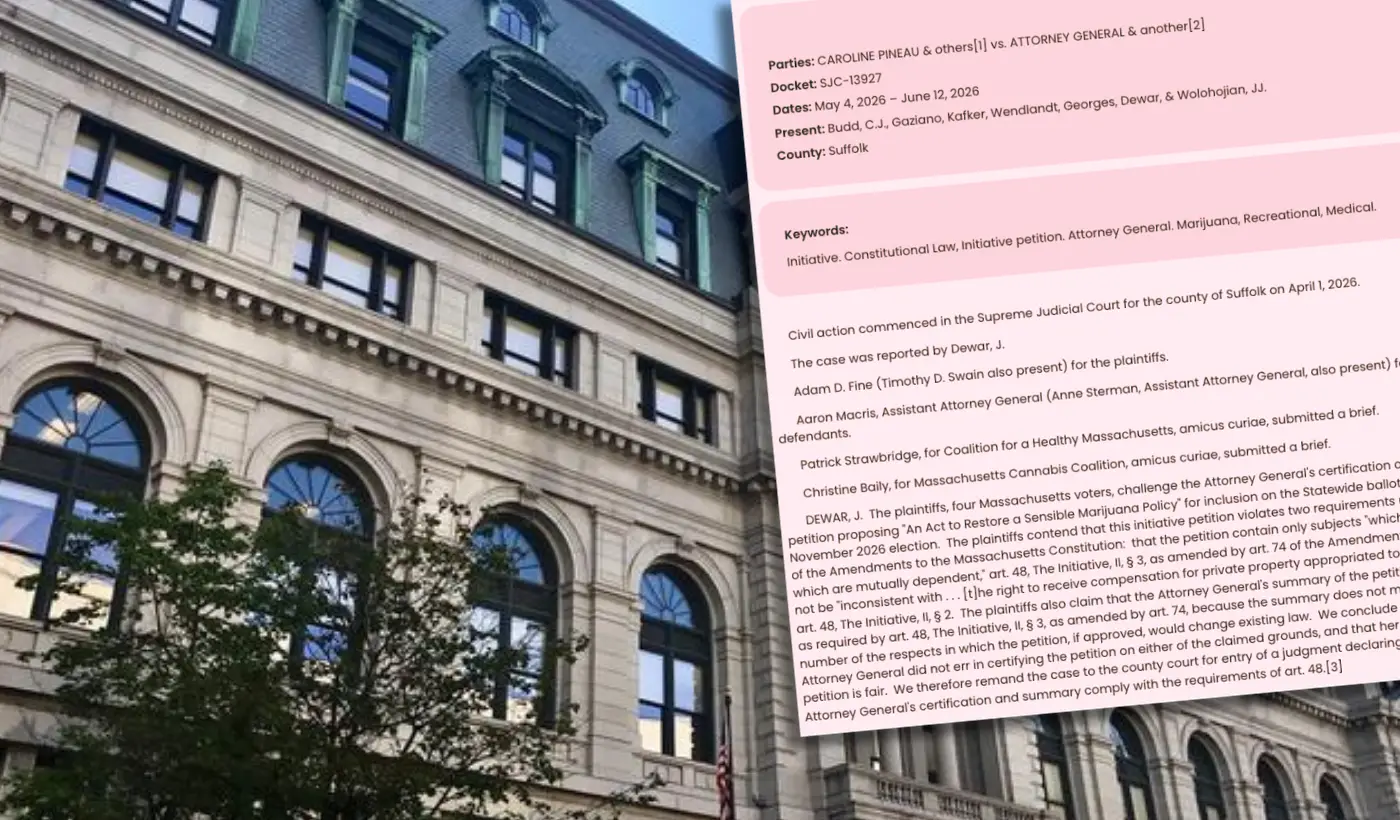
The other intersecting story comes from the highest court in the commonwealth. A lawsuit filed with the Supreme Judicial Court in April against Attorney General Andrea Campbell and Secretary of State William Galvin stated the initiative, titled “An Act to Restore a Sensible Marijuana Policy,” “fails constitutional muster in three key ways—it bundles unrelated subjects in a way impermissible by the law governing initiative petitions, it features a misleading and deficient summary by Campbell, and it eliminates an established state grant program.”
On Friday, the SJC officially rejected the lawsuit.
The major takeaway here isn’t the rejection itself. Rather, the message is that in order to achieve your ballot goals in this state, there is almost no end to the cloak-and-dagger tactics you are legally allowed to deploy. For all of the campaign’s public buffoonery, and their spokesperson not being able to complete a sentence without farting through her teeth, the coalition that’s behind the subterfuge planted a significant bomb here, and it’s going to take more than just a little effort to deactivate it.
What the plaintiffs argued
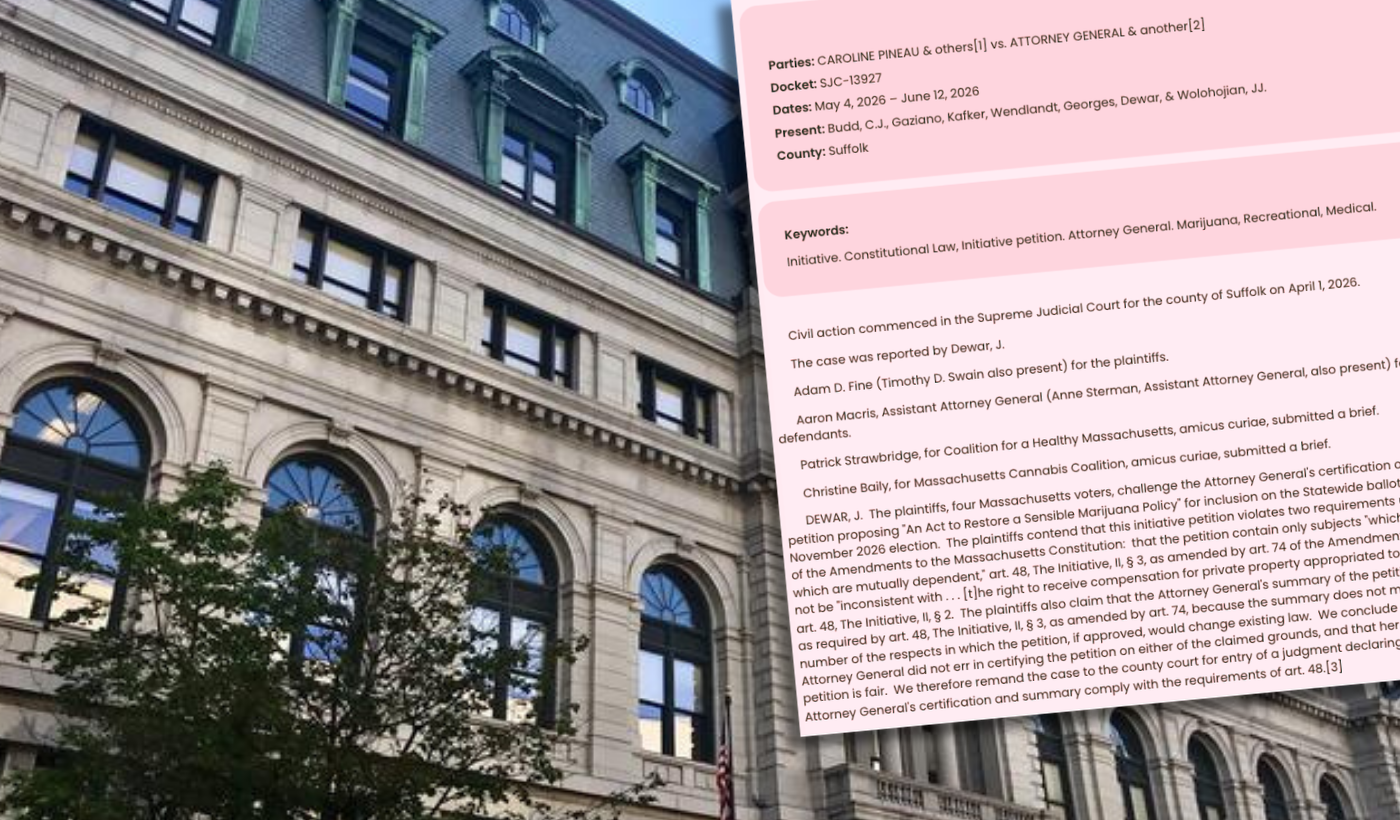
“The plaintiffs, four Massachusetts voters, challenge[d] the Attorney General’s certification of an initiative petition proposing ‘An Act to Restore a Sensible Marijuana Policy’ for inclusion on the Statewide ballot at the November 2026 election.” The complaint was filed by stakeholders from Stem Haverhill (Caroline Pineau), Treevit (Gyasi Sellers), and Paper Crane Provisions (Lisa Mauriello and Boey Bertold), represented by Vicente LLP attorneys Adam Fine and Timothy Swain.
“The plaintiffs contend that this initiative petition violates two requirements under … the Massachusetts Constitution: that the petition contain only subjects which are related or which are mutually dependent,” … and that it not be ‘inconsistent with . . . [t]he right to receive compensation for private property appropriated to public use.’”
Furthermore, “The plaintiffs also claim that the Attorney General’s summary of the petition is not ‘fair’ … because the summary does not mention a number of the respects in which the petition, if approved, would change existing law.” Among other things, the repeal would eliminate “the Commonwealth’s mandated research priorities concerning public health impacts of marijuana and impacts on historically disadvantaged communities.”
What the Supreme Judicial Court said
Spoiler: The SJC “conclude[d] that the Attorney General did not err in certifying the petition on either of the claimed grounds, and that her summary of the petition is fair.”
Read the decision, though, and it’s actually quite telling. Regarding the argument that the question is too broad, the court ruled “the petition does not violate the relatedness requirement on the ground that it concerns both recreational and medical marijuana.”
Also, “The other aspects of the petition highlighted by the plaintiffs are not unrelated to the petition’s common purpose. The elimination of the trust, social equity program, and mandatory host community agreements all bear an operational relationship to the petition’s common purpose.”
In other words, it’s OK for this bill to trample social equity and all these other hard-fought elements of cannabis in Massachusetts because voters should know those things are tied to the adult-use program, as opposed to the medical side. Yeah, sure they do. No wiggle room for any mischief there.
As for the language, plaintiffs argued that the referendum doesn’t adequately explain the repercussions of passage. The delusional court, however, ruled, “The Attorney General’s summary of this petition gives the required ‘fair and intelligent conception of the main outlines of the measure.’” The ruling even notes: “Although, as the plaintiffs point out, the summary omits mention of a number of the consequences of repealing [recreational marijuana laws], “[a]ll the Constitution demands is a summary.”
The SJC even went one step further, writing, “The wisdom of omitting such minor details from the summary of an initiative petition is evident here, where, following certification of this petition, the Legislature made a host of amendments to the existing statutes.” So basically, instead of condemning the vague language, they lauded it.
Cheaters often win, and this is precisely the sort of baloney show that unfolds in the courts while liars on the street collect signatures under fraudulent pretenses. And with the biggest court in Mass backing up some of the most outrageous election-related behavior this state has seen in ages, it’s hard to imagine that things will get any more fair between now and November. Buckle up.