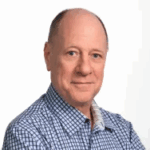

The indictment of Suffolk County Sheriff Steven Tompkins spotlights the ‘vestigial’ practice of putting a political office in charge of local corrections
For a guy who holds a fairly obscure elected county office, one that voters have little to no contact with – if they are lucky – Steve Tompkins managed to make himself a remarkably visible player on the political scene. He threw in early with Elizabeth Warren in 2012 as she ran for US Senate and spoke eight years later at her presidential campaign kickoff in 2020. He’s been a prominent ally of Boston Mayor Michelle Wu’s, and once made a run at chairing the Massachusetts Democratic Party.
While Tompkins has adeptly leveraged his office to forge a deep well of political connections, his resume for the job itself was remarkably thin when Gov. Deval Patrick named him Suffolk County sheriff in 2013 after tapping then-Sheriff Andrea Cabral to serve as his public safety secretary. Tompkins had served as communications chief to Cabral, a college classmate from Boston College, but had no formal background in corrections or law enforcement.
When Patrick was questioned at the time about the appointment, he said the quiet part out loud about Massachusetts sheriffs, who have responsibility for managing complex county correctional facilities but get the job by political fundraising, campaigning, and winning elections to six-year terms. “It’s a political job, so the folks that are criticizing it as a political hire, tell them: They’re right,” Patrick said after swearing in Tompkins.
While he may earn points for candor, Patrick’s “political hire” to fill the sheriff’s seat until the next election does not, in hindsight, look like one of his finer personnel picks in the wake of Tompkins’s indictment last month on federal corruption charges.
Tompkins, who has handily won three election campaigns since his appointment, is charged with extortion involving a cannabis company whose stock he’s alleged to have pressured the firm to sell to him before the business went public. The indictment alleges that he later demanded to be repaid his initial investment, despite the value of the stock falling below his purchase price. The company had a partnership with the sheriff’s office to train released inmates for jobs in the cannabis industry, something key to its licensing under the state law requiring cannabis firms to invest in communities and individuals disproportionately affected by past sanctions against marijuana.
Tompkins entered a not guilty plea to the charges. He has not commented, but his lawyer, Martin Weinberg, said following Tompkins’s arraignment, “The facts simply will demonstrate that he was charged with a crime he did not commit.”
Tompkins’s use of the sheriff’s perch as a springboard to affable – and ambitious – player in Democratic politics highlights what Boston College political science professor David Hopkins calls the “odd and vestigial” practice of electing people who are essentially regional correctional commissioners, with voters often having little basis to evaluate whether they’re doing a good job or not.
The office of sheriff itself is one of the oldest public positions in the Western hemisphere, referenced several times in the Magna Carta of 1215. Sheriffs served as tax collectors and carried out other duties for the British monarch. In the US, the position has become an elected one, with Massachusetts moving from gubernatorial appointment of sheriffs to electing them in 1855.
While that nominally makes the office more accountable to the public, Mirya Holman, public policy professor at the University of Houston and co-author of a 2024 book on US sheriffs, says the reality often falls short of that ideal.
“In order for elections to hold people accountable, you have to have competitive elections and voters have to be able to evaluate and compare candidates, which doesn’t happen a lot with sheriffs,” said Holman, who co-authored The Power of the Badge: Sheriffs and Inequality in the United States with Texas Christian University political scientist Emily Farris.
That’s especially true in Massachusetts, where sheriffs are in charge of county jails and houses of correction but largely have no public patrol function as they do in other states. “It doesn’t seem like voters are deeply aware of what a sheriff does, especially in a place like Massachusetts, where the sheriff is in this hidden office,” said Holman.
Instead, the sheriff’s post here has often been viewed as a cushy political sinecure, complete with a built-in campaign army of volunteers and donors thanks to corrections staff who are often eager to show loyalty to their boss.
Tompkins’s focus on the political dimensions of the office was evident from the start, and not always in ways that comported with the law. He was fined $2,500 in 2015 by the State Ethics Commissions for flashing his official ID at store owners and asking them to remove signs for his election opponent in his first campaign to keep the job after his appointment. Two years ago, he was again sanctioned by the Ethics Commission, paying a $12,300 civil penalty for creating a paid position in the sheriff’s department for a niece who handled childcare for him during work hours and for also asking other subordinates to do personal errands.
Other Massachusetts sheriffs have also not exactly covered themselves in glory lately. Earlier this week, the state campaign finance office said Norfolk County Sheriff Patrick McDermott has agreed to pay the state $36,300 from his personal and campaign funds to settle charges that he unlawfully used thousands of dollars in campaign funds to advance outside businesses he operates. Last September, Hampden County Sheriff Nick Cocchi was arrested for operating under the influence outside the MGM casino in Springfield, where he had driven in a state-owned SUV.
The election of sheriffs to run local correctional facilities stands in sharp contrast to the operation of state prisons by the Department of Correction, whose commissioner is appointed by the governor and must, under state law, have “at least five years of adult correctional administrative experience.”
Putting state prisons under the oversight of an appointed official with corrections experience while leaving county facilities to be run by sheriffs who win what are often low-visibility elections is something “we don’t really square,” said Holman. “People who don’t have formal corrections or law enforcement background are in charge of running these facilities. That’s a huge problem in the United States.”
Which is not to say that there aren’t plenty of sheriffs who bring relevant background to the position and pursue the job professionally and thoughtfully.
Middlesex County Sheriff Peter Koutoujian, a former legislator and prosecutor, has developed a raft of programs aimed at rehabilitation and successful reentry of inmates. In 2023, he was named national Sheriff of the Year by the Major County Sheriffs of America. Plymouth County Sheriff Joseph MacDonald is also a former prosecutor who has overseen innovative inmate programs during his 20-year tenure, the longest of any of the state’s current 14 sheriffs.
“I am strongly in favor of having the sheriffs be elected,” said MacDonald, who also taught history and constitutional law and Quincy College prior to winning office in 2004. “If you’re looking for accountability, I think that is the best way. It’s not a perfect way but I think it is the best way. I have a level of faith in the electorate.”
In the debate over whether sheriffs should be elected or, like the state Department of Correction commissioner, appointed based on their background, MacDonald acknowledged that there are “cogent arguments” on both sides.
But there is unlikely to be much push for change.
“Once these offices become elected, they often stay elected regardless of the argument for or value of that,” said Hopkins, the BC political science professor. “Whenever you’ve got these offices that are obscure enough that the average voter doesn’t really grasp what’s going on and figuring out who should hold them is a real challenge, you can make a case that it should not be an elected office. But it’s always a hard sell to tell voters why we should take away their right to choose someone.”
As for the string of recent events casting sheriffs in a harsh light, though emphasizing that “everyone is cloaked in a presumption of innocence,” MacDonald said, “when these things happen, it damages all of us. In law enforcement, in general, and for sheriffs, in particular, we should be held to a higher standard. People should be able to look at their sheriff and say, this is a guy we trust.”
This article first appeared on CommonWealth Beacon and is republished here under a Creative Commons Attribution-NoDerivatives 4.0 International License.